What Benefits Do Swedish Employers Usually Offer?
When you first consider working in Sweden, it’s natural to wonder about more than just your salary. Coming from another country, the benefits landscape can be a bit of a mystery, filled with Swedish terms and cultural nuances you might not immediately grasp. This guide is here to demystify what Swedish employers typically offer, helping you understand the full package beyond your basic paycheque.
Understanding the Core of Swedish Employee Benefits
Navigating the world of Swedish employment benefits can feel like learning a new language – and not just Swedish! What’s considered standard here might be a luxury elsewhere, and vice versa. It’s crucial to understand the foundation upon which all other benefits are built.
The Legal Framework and Collective Agreements (Kollektivavtal)
In Sweden, the law sets a baseline for employee rights and benefits, but it's often the collective agreements, known as kollektivavtal, that truly shape the comprehensive package an employee receives. These agreements are negotiated between trade unions (fackförbund) and employer organizations, or directly between a union and an individual employer. They cover a wide array of terms, often including higher minimum wages, more generous pension contributions, better sick pay, and more extensive insurance coverage than what the law alone mandates.
The prevalence of collective agreements is significant; a vast majority of Swedish employees are covered by one, even if they aren't personally a member of a union. This means that many benefits are not just "perks" but rather established rights within an industry or company. For you, as a newcomer, it’s incredibly important to know if your workplace has a collective agreement and what it entails. It’s often a sign of a stable and fair employer. Don't be shy about asking during interviews or once you've received an offer; knowing this can make a huge difference to your overall employment conditions. To learn more about how these agreements function, check out our detailed guide on Understanding Collective Agreements (Kollektivavtal) in Sweden.
Statutory vs. Employer-Provided Benefits
It's helpful to draw a clear line between what is legally mandated for all employees in Sweden and what employers offer as additional, often competitive, benefits.
Statutory Benefits are those enforced by Swedish law, ensuring a basic level of security and fairness. These include:
- Minimum Annual Leave: All employees are legally entitled to 25 days of paid annual leave per year, though many collective agreements or individual contracts offer more.
- Sick Pay (Sjuklön): Employers are legally obliged to pay sick pay for the first 14 days of an illness, after an initial waiting day (karensdag). After this, the state takes over with sickness benefits (sjukpenning) through Försäkringskassan.
- Parental Leave (Föräldraledighet): Sweden boasts one of the world's most generous parental leave systems, with parents sharing 480 days of paid leave per child, which can be taken up until the child is 12 years old.
- Care for Sick Children (VAB): The right to stay home from work to care for a sick child, receiving compensation from Försäkringskassan.
Employer-Provided Benefits are those that go above and beyond the legal requirements, designed to attract and retain talent. These can vary significantly between companies and industries but often include:
- Occupational Pensions (Tjänstepension): One of the most common and valuable benefits, supplementing the public pension.
- Wellness Contributions (Friskvårdsbidrag): An allowance for health-promoting activities.
- Private Health Insurance (Sjukvårdsförsäkring): Offering faster access to specialists, bypassing public healthcare queues.
- Professional Development: Training, courses, and opportunities for skill enhancement.
- Flexible Working Arrangements: Including remote work options, flexible hours, and shorter workweeks.
Understanding this distinction is key to evaluating a job offer. While a company might advertise "great benefits," it’s crucial to know if those are merely the standard legal entitlements or genuinely enhanced perks.
Common Monetary and Time-Off Benefits
Sweden is renowned for its progressive social policies, and this definitely extends to how employees are compensated, not just in terms of salary, but through a robust system of time off and financial support during key life events. These benefits significantly contribute to Sweden's strong emphasis on work-life balance.
Generous Parental Leave and VAB (Care for Sick Children)
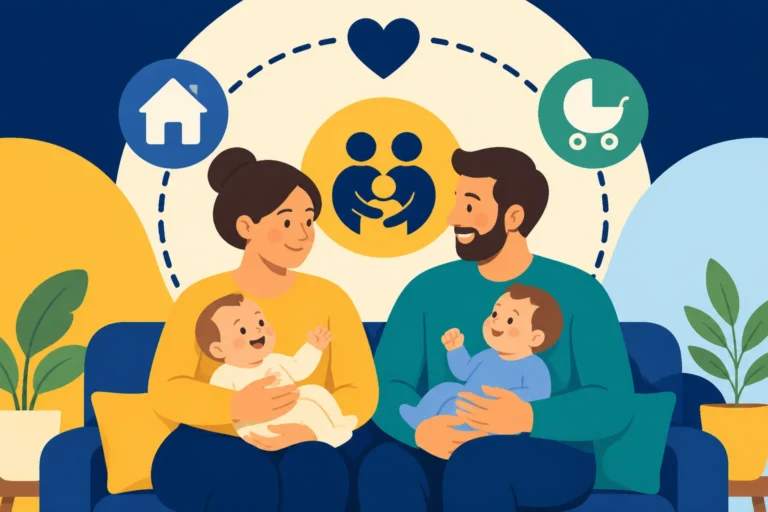
When it comes to supporting families, Sweden truly stands out, particularly with its comprehensive system for parental leave, known as föräldraledighet. Parents are entitled to a total of 480 days of paid leave per child, which they can use flexibly until the child turns 12. These days are compensated by Försäkringskassan, the Swedish Social Insurance Agency, usually at around 80% of your normal income, up to a certain ceiling. What's truly revolutionary is that both parents are encouraged to take leave, with 90 days specifically reserved for each parent, non-transferable to the other. This policy actively promotes gender equality in parenting and career development. Many employers might even top up the Försäkringskassan benefit, meaning you could receive closer to 90% or 100% of your salary during a portion of your parental leave, depending on their collective agreement. To fully grasp the ins and outs of this incredible system, make sure to read our detailed guide on Parental Leave in Sweden: Föräldrapenning and the 480 Days.
Beyond parental leave, there's VAB (Vård Av Barn), which literally translates to "care of child." This benefit allows parents to take paid time off work to care for a sick child, or even accompany a child to a doctor's appointment. Like parental leave, VAB compensation comes from Försäkringskassan, typically at 80% of your salary. It covers children up to 12 years old, and sometimes older for children with special needs. This means you don't have to use your precious vacation days when your child has a fever, ensuring both your child's well-being and your own peace of mind. For a deeper dive into how this system supports working parents, take a look at our article on Taking Care of a Sick Child: VAB and Your Rights in Sweden.
Annual Leave (Semester) and Public Holidays
Your time off is highly valued in Sweden. The legal minimum for annual paid leave is 25 days per year, a figure that often surprises newcomers from countries with less generous entitlements. However, many collective agreements or individual employment contracts will often increase this to 30 days. You also accumulate semesterersättning, which is holiday pay – an extra payment you receive either when you take your holiday or as a lump sum if you leave employment with unused accrued holiday. This means your vacation days are truly paid, not just unpaid time off. It’s a common practice for many Swedes to take a significant portion of their annual leave during July, often shutting down businesses or departments for a month-long summer break. While not mandatory, it’s a cultural phenomenon that highlights the nation’s commitment to rest and recuperation. For more insights into how these holidays work, explore our guide on Annual Leave and Holidays: How Semester Works in Sweden.
In addition to your annual leave, Sweden observes a number of public holidays (röda dagar, or "red days"), which are typically paid days off. These include traditional Christian holidays like Christmas and Easter, as well as unique Swedish celebrations such as Midsummer's Eve and Walpurgis Night (though only a few public holidays actually fall on the day of these celebrations). If a public holiday falls on a weekend, there generally isn't an extra day off granted during the week, but the total number of paid days off remains substantial.
Sick Pay (Sjuklön) and Sickness Benefit (Sjukpenning)
Falling ill while working in a new country can be a source of anxiety, but Sweden has a clear system in place to ensure you're covered financially. When you're sick, your employer is responsible for paying your sick pay, known as sjuklön, for the first 14 days of your illness. The first day of sickness is typically a waiting day (karensdag or karensavdrag), for which you generally receive no pay. After this, you receive approximately 80% of your regular salary from your employer for the subsequent days, up to the 14-day mark.
If your illness extends beyond 14 days, the responsibility shifts from your employer to Försäkringskassan, the Swedish Social Insurance Agency. At this point, you apply for sjukpenning, or sickness benefit. Försäkringskassan will assess your ability to work and continue to pay you a percentage of your income. It's crucial to get a doctor's certificate (läkarintyg) if your illness lasts longer than seven days to ensure your claim for sjukpenning is valid. Understanding this transition from employer-paid sick leave to state-funded sickness benefit is essential for your financial security. For a more detailed breakdown of this system and your rights, refer to our comprehensive article on Sick Pay in Sweden: Sjukpenning, Sick Notes, and Your Rights.
Health, Wellness, and Professional Development Perks
Beyond the essential time-off and family-focused benefits, Swedish employers often invest in their employees' long-term well-being and professional growth. These benefits can significantly enhance your quality of life and career trajectory in Sweden.
Occupational Pensions (Tjänstepension) and Insurance
While Sweden has a robust public pension system, one of the most significant and valuable benefits offered by Swedish employers is the occupational pension, or tjänstepension. This is essentially an additional pension paid by your employer on top of your public pension. It's usually a standard part of collective agreements, making it a very common benefit across many sectors. The amount contributed by your employer can vary but typically ranges from 4.5% to 6% of your salary, sometimes even more for higher earners. This isn't just a small bonus; it's a substantial contribution to your financial security in retirement and is often managed by a chosen pension provider, giving you some flexibility in how it's invested.
In addition to pensions, many Swedish employers provide a suite of insurance benefits. These often include:
- Occupational Injury Insurance (Arbetsskadeförsäkring): Covers injuries or illnesses that occur as a direct result of your work.
- Life Insurance (Tjänstegrupplivförsäkring): Provides financial protection for your dependents in the event of your death.
- Loss of Income Insurance (Trygghetsförsäkring vid arbetsskada): Offers supplementary compensation if you can't work due to an occupational injury or illness.
These insurances offer a crucial safety net, providing peace of mind knowing that you and your family are protected against unforeseen circumstances. Understanding your tjänstepension and the various insurances is vital for long-term financial planning in Sweden. Our article on Occupational Pension (Tjänstepension): The Employer Layer Explained delves much deeper into this important topic.
Healthcare and Wellness Contributions (Friskvårdsbidrag)
While Sweden's public healthcare system ensures that everyone registered in the population register with a [personnummer] has access to affordable medical care, some employers offer additional health-related perks. These might include private health insurance (sjukvårdsförsäkring), which can offer faster access to specialist appointments or certain treatments by bypassing public queues. This isn't a replacement for the public system, but rather a complementary benefit that can be very attractive for those who value quicker access to non-urgent care. For a comprehensive overview of how healthcare works here, check out Healthcare in Sweden for Foreign Residents: The Complete System Guide (2027).
A widely popular benefit is the friskvårdsbidrag, or wellness grant. This is a tax-exempt allowance from your employer that you can use for health-promoting activities. The amount typically ranges from a few thousand Swedish Kronor per year (e.g., SEK 3,000-5,000) and can be used for a wide range of activities, including gym memberships, sports activities, massage, or even certain online fitness classes. It's a fantastic way for employers to encourage a healthy lifestyle and for employees to engage in activities they enjoy without the financial burden. When considering your overall financial picture as an expat, it's worth noting that managing these kinds of benefits can have tax implications. Services like Taxes for Expats can be incredibly helpful in navigating how such employer contributions are reported and what deductions you might be eligible for.
Professional Development and Language Learning
Swedish employers often place a high value on continuous learning and professional growth. Many companies offer various forms of professional development opportunities, ranging from internal training programs and workshops to external courses, conferences, and certifications. This isn't just about improving your skills for your current role; it's also about fostering long-term career progression and ensuring you stay competitive in your field. It shows an investment in your future, which can be a significant motivator.
For expats, language learning support can be an invaluable benefit. While English is widely spoken in Swedish workplaces, becoming proficient in Swedish can greatly enhance your integration, career prospects, and daily life. Some employers offer or subsidize Swedish language courses, either through internal programs or by covering the costs of external providers. Even if your company doesn't explicitly offer this, don't be afraid to inquire about whether they would support you in taking classes. Platforms like iTalki can be a flexible and cost-effective way to get started with Swedish lessons, and your employer might be open to covering the cost if you present it as a professional development initiative. For those looking to dive into the language, our guide on Learning Swedish: SFI, Courses, and Language Paths for Newcomers offers excellent starting points.
Less Obvious but Valuable Benefits
Beyond the formal policies and financial contributions, Swedish workplaces offer a host of less tangible, but equally significant, benefits that contribute to a high quality of working life. These often reflect the deeply ingrained cultural values of equality, collaboration, and well-being.
Fika, Flexible Working, and Work-Life Balance
One of the most charming and universally appreciated aspects of Swedish workplace culture is fika. More than just a coffee break, fika is a mandatory social pause, usually twice a day, where colleagues gather for coffee and a small treat to chat, relax, and connect. It's not just a perk; it's a cornerstone of team building, communication, and overall workplace well-being. Fika promotes a sense of camaraderie and ensures everyone takes short, refreshing breaks, contributing to higher productivity and lower stress levels. For more on this beloved tradition, delve into What Is 'Fika' and Why Does It Matter at Swedish Workplaces?.
Beyond fika, Swedish employers generally embrace a strong culture of work-life balance. Flexible working arrangements are common, allowing employees to adjust their start and end times, or work remotely for a portion of the week. Many companies offer the option for flexibel arbetstid (flexible working hours), empowering employees to manage their personal appointments and family commitments more easily. This focus on flexibility isn't just about employee satisfaction; it's also rooted in a belief that a well-rested and balanced employee is a more productive one. It allows for a life outside of work that is rich and fulfilling, a key draw for many expats.
Employee Discounts and Other Fringe Benefits
While perhaps not as significant as a pension contribution, employee discounts and other fringe benefits can add up and make a noticeable difference to your daily expenses. Many companies, especially larger ones, have agreements with various businesses to offer discounts on a wide range of products and services. These can include:
- Gym Memberships: Subsidized or discounted rates at local fitness centers.
- Public Transport Cards: Contributions towards your monthly or annual travel passes.
- Cultural Activities: Discounts on tickets to theatres, concerts, or museums.
- Retail Discounts: Special offers from various shops, both online and brick-and-mortar.
- Tech and Gadgets: Discounts on phones, laptops, or other electronic devices, sometimes through an optional salary sacrifice scheme.
These benefits, while seemingly small, contribute to a higher disposable income and make various aspects of Swedish life more accessible and affordable. It's always worth asking about such benefits when you're onboarding or looking at a new role. You might be surprised at the savings you can accumulate, helping you budget for the real cost of living in Sweden.
Summary of Common Employer Benefits in Sweden
To give you a quick overview, here's a table summarizing the most common types of benefits you can expect from Swedish employers:
| Benefit Category | Typical Offering | Notes |
|---|---|---|
| Monetary & Time-Off | Annual Leave (Semester) | Min. 25 days (often 30), plus semesterersättning (holiday pay). |
| Sick Pay (Sjuklön) & Sickness Benefit (Sjukpenning) | Employer pays for first 14 days (after 1 karensdag); Försäkringskassan takes over thereafter. | |
| Parental Leave (Föräldraledighet) | 480 days per child, shared between parents, compensated by Försäkringskassan (often topped up by employer). | |
| Care for Sick Child (VAB) | Paid time off to care for sick children, compensated by Försäkringskassan. | |
| Health & Wellness | Occupational Pension (Tjänstepension) | Employer contributions (4.5%-6%+) to supplementary pension, often through collective agreements. |
| Occupational Insurances | Covers occupational injury, life insurance, loss of income due to work-related illness/injury. | |
| Wellness Grant (Friskvårdsbidrag) | Tax-exempt allowance for health-promoting activities (e.g., gym, massage). | |
| Private Health Insurance (Sjukvårdsförsäkring) | Some employers offer faster access to private specialists (not a replacement for public healthcare). | |
| Professional Growth | Professional Development | Training, courses, conferences, certifications. |
| Language Learning Support | Some employers subsidize Swedish language courses or offer internal training. | |
| Workplace Culture & Misc. | Fika | Instituted coffee breaks, promoting social interaction and well-being. |
| Flexible Working Hours & Remote Work | Common options for work-life balance. | |
| Employee Discounts | Deals on gym memberships, public transport, retail, tech, etc. |
Disclaimer
Please remember that while this guide provides general information about employer benefits in Sweden, individual circumstances can vary greatly. Employment laws and benefit structures can change, and specific offerings will depend on your employer, your employment contract, and any applicable collective agreements. Always consult official sources like Försäkringskassan, Skatteverket, Migrationsverket, or a qualified legal professional or union representative for advice tailored to your personal situation.