How Often Do I File VAT as a Small Business in Sweden?
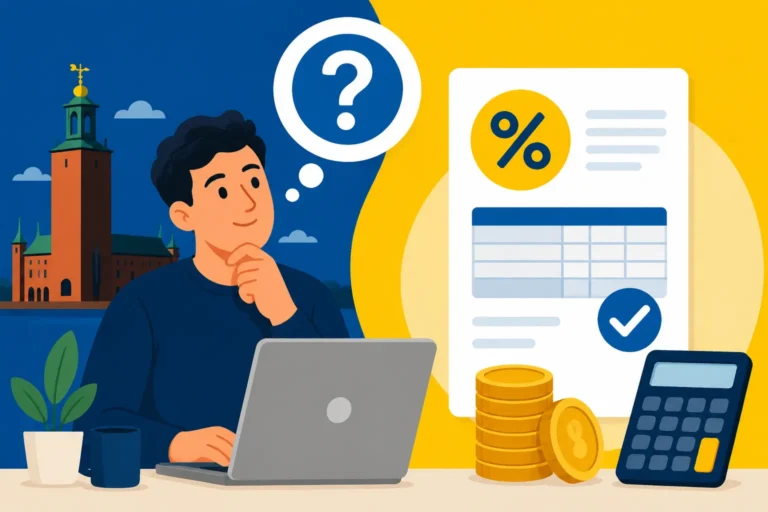
One of the most common headaches for anyone starting a small business or freelancing in Sweden, especially if you're new here, is figuring out the labyrinthine tax system. And right at the top of that list is Value Added Tax, or Moms as it's known here. It’s not just about knowing if you need to charge it, but the crucial question of how often you actually need to report it to Skatteverket. This guide will walk you through the nitty-gritty of Swedish VAT reporting frequencies, so you can avoid those unwelcome penalty fees and keep your business running smoothly.
Getting to Grips with Swedish VAT (Moms) for Your Small Business
Let’s be honest, the word "tax" alone can make your eyes glaze over, especially when it's in a foreign language and involves a different system than what you're used to. But understanding VAT, or Moms (Mervärdesskatt) in Sweden, is fundamental if you're running a business that sells goods or services. It's essentially a consumption tax that's added to most things you buy, and as a business, you act as an intermediary, collecting it on behalf of the state.
First things first: do you even need to register for Moms? The general rule of thumb is that if your taxable sales (turnover) are expected to exceed 80,000 SEK (excluding Moms) over a 12-month period, you must register for VAT. If your turnover is below this threshold, you’re not typically required to register, but you can choose to do so voluntarily.
Why would anyone voluntarily register for VAT if they don't have to? Well, there's a good reason. If you're buying a lot of goods or services for your business that include Moms, being VAT-registered allows you to reclaim that input VAT. For instance, imagine you're a freelance photographer just starting out. You might not hit that 80,000 SEK threshold in your first year, but you're buying expensive camera equipment, editing software, and setting up a studio. All those purchases include Moms. If you're registered for Moms, you can deduct the Moms you've paid on these business expenses from the Moms you charge your clients, or even get a refund if your input Moms is higher than your output Moms. It’s a bit of a balancing act, but it can save you a fair bit of cash.
The basic principle is straightforward: when you sell a product or service, you add Moms to your price (this is your output Moms). When you buy something for your business, you pay Moms on it (this is your input Moms). At the end of your reporting period, you deduct your total input Moms from your total output Moms. If output is higher, you pay the difference to Skatteverket. If input is higher, you get a refund. Simple, right? In theory, yes. In practice, it involves meticulous record-keeping and understanding which VAT rates apply to which goods and services. For example, while the standard rate is 25%, some services like restaurant meals, accommodation, or certain cultural events might be 12%, and things like newspapers often have a 6% rate. If you're curious about specific categories, you can dive deeper into topics like What VAT (Moms) Rate Applies to Food in Sweden in 2026?.
It's also crucial to understand your business structure. Are you a sole trader (enskild firma), a limited company (aktiebolag), or something else? The underlying principles of Moms apply across the board, but how it interacts with your personal finances and other tax obligations can differ slightly. For many freelancers and small consultants, operating as an enskild firma is the starting point, and figuring out Moms early on is key. This is a big part of understanding The Swedish Tax System Explained: Rates, Returns, and Filing for anyone new to the country.
Unpacking Your VAT Reporting Frequency (Momsredovisning)
Now, for the core question: how often do you actually have to send in those Moms reports? Skatteverket, the Swedish Tax Agency, determines your reporting frequency based primarily on your expected annual turnover. This is a really important detail, because if you get it wrong, you could face penalties. It's not just about convenience; it's about compliance.
Quarterly Reporting (Kvartalsvis Momsredovisning)
For many small businesses and independent contractors, especially when starting out, quarterly reporting is the most common frequency. This applies to businesses with a taxable turnover of up to 40 million SEK per year. Yes, 40 million SEK is still considered "small" in this context, which might surprise some expats coming from countries with lower thresholds!
If your business falls within this category, you’ll be submitting your Moms declaration (Momsdeklaration) four times a year. The reporting periods follow the calendar quarters:
- Q1 (January – March): Report by the 12th of May.
- Q2 (April – June): Report by the 12th of August.
- Q3 (July – September): Report by the 12th of November.
- Q4 (October – December): Report by the 12th of February the following year.
These dates are strict. If the 12th falls on a weekend or public holiday, the deadline usually shifts to the next working day. Missing a deadline can result in a late filing fee, so it’s something you absolutely want to mark in your calendar or, better yet, automate. For example, if your business primarily offers consulting services and you have a steady stream of clients, you'll accumulate Moms payable throughout the quarter. You'll then consolidate all your sales invoices (with Moms charged) and purchase receipts (with Moms paid) for that quarter, calculate the difference, and report it to Skatteverket. This rhythm allows for a manageable workload without constantly thinking about tax submissions.
Monthly Reporting (Månadsvis Momsredovisning)
If your business has a higher turnover, specifically exceeding 40 million SEK per year, you are generally required to report Moms monthly. This also applies if you’re involved in certain types of international trade that have specific reporting requirements, regardless of your turnover.
For monthly filers, your Momsdeklaration is due on the 26th of the month following the reporting period. So, for your sales and purchases in January, you’d report by February 26th, and so on. This is a much tighter turnaround, requiring very disciplined bookkeeping and financial management.
However, even if your turnover is below the 40 million SEK threshold, you might choose to report Moms monthly. Why on earth would you opt for more bureaucracy? The main reason is cash flow. If your business regularly has more input Moms (Moms you've paid on purchases) than output Moms (Moms you've charged clients), you're due a refund from Skatteverket. Reporting monthly means you get your refunds faster, which can be a significant advantage for businesses with high initial investments or fluctuating sales where you're often in a refund position. Think of a start-up that invests heavily in equipment or marketing before its sales truly ramp up. Getting that Moms back quicker can make a real difference. For guidance on how your tax obligations fit into the broader picture, resources like When Does Skatteverket Send Out the Tax Return? can offer further clarity on the overall tax timeline.
Annual Reporting (Årsvis Momsredovisning)
For truly small businesses, specifically those with a taxable turnover of up to 1 million SEK per year, annual Moms reporting is an option. This is often the most appealing choice for very small freelancers or side hustles, as it significantly reduces the administrative burden.
If you report annually, your Momsdeklaration is due on the 26th of February the year after the reporting period. So, for all your Moms activities in 2024, you would report by February 26th, 2025. This gives you a lot more breathing room to consolidate your financial records.
However, there's a catch: you can only report annually if you are not regularly involved in certain types of international trade (e.g., selling goods to other EU countries) or if you are not receiving Moms refunds frequently. If you're constantly due a refund, Skatteverket might nudge you towards more frequent reporting to balance things out. For very small businesses, particularly those operating solo, this option can be a lifesaver in managing time and stress.
Here’s a quick overview to help you visualize the frequencies:
| Annual Taxable Turnover (Excl. Moms) | Reporting Frequency | Due Date for Momsdeklaration |
|---|---|---|
| Up to 1,000,000 SEK | Annually | Feb 26th (following year) |
| 1,000,001 SEK to 40,000,000 SEK | Quarterly | May 12th, Aug 12th, Nov 12th, Feb 12th (following year) |
| Over 40,000,000 SEK | Monthly | 26th of the month (following reporting period) |
It's important to keep an eye on your turnover. If your business grows and crosses a threshold, your reporting frequency will change. Skatteverket usually notifies you, but it’s ultimately your responsibility to adapt. If you're someone who arrived mid-year and started a business, understanding how this impacts your first tax cycle, including Moms, is crucial. You might find guidance in articles like How Do I File a Tax Return If I Arrived Mid-Year in Sweden? to piece it all together. When in doubt, seeking professional advice from a Swedish accountant or a service like Taxes for Expats can save you a lot of grief.
The Practicalities of Filing Your Momsdeklaration
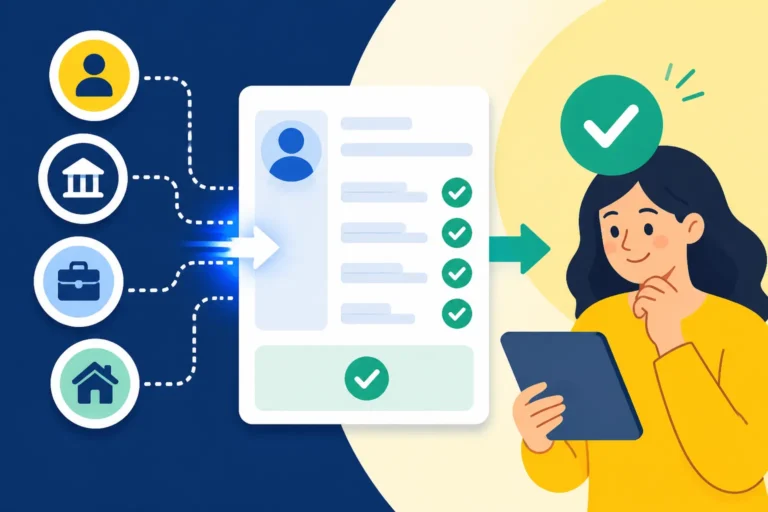
So, you've figured out your reporting frequency. Now, how do you actually do it? The process is thankfully streamlined, largely thanks to Skatteverket's excellent digital services.
The primary method for filing your Momsdeklaration is through Skatteverket's e-service. This requires you to have a Swedish e-ID, most commonly BankID. If you're new to Sweden, getting your How Do I Get BankID: Sweden's Essential Digital Identity is one of the very first bureaucratic hurdles you'll face, but it unlocks pretty much every essential digital service here, including tax filing. Without it, you’ll be stuck with paper forms, which are slower and more prone to errors.
Once you log in, you'll navigate to the "Mina sidor" (My Pages) section, where you can find your Momsdeklaration forms ready for submission.
Here's a simplified breakdown of the steps:
- Gather Your Records: This is where diligent bookkeeping pays off. You'll need a summary of all your sales (output Moms) and all your purchases (input Moms) for the reporting period. Ensure you've correctly categorized everything and applied the right VAT rates. This is vital, and an article like What Records Must a Sole Trader Keep for Skatteverket? can give you a head start on what needs to be maintained.
- Calculate the Net Moms: Subtract your total input Moms from your total output Moms.
- Fill in the Form: On the e-service, you'll input the aggregated amounts into the relevant fields. This typically includes:
- Total sales subject to 25% Moms.
- Total sales subject to 12% Moms.
- Total sales subject to 6% Moms.
- Sales with reversed tax liability (if applicable).
- Sales to other EU countries (if applicable).
- Total Moms to be reported (the output Moms).
- Total input Moms to be deducted (Moms paid on purchases).
- The final amount of Moms payable or refundable.
- Review and Submit: Double-check all figures before submitting. One small typo can lead to a lot of hassle later. Once submitted, you'll receive a confirmation.
- Payment or Refund:
- If you owe Moms: Skatteverket will send you payment details. You'll need to transfer the money from your Swedish bank account using a specific OCR number provided for that declaration. Many people use their online bank’s bill payment service. More details on general bill payment can be found in How Do I Pay Bills Through My Swedish Bank?.
- If Skatteverket owes you a refund: The money will be automatically paid into the bank account you have registered with Skatteverket, usually within a few weeks of your submission. Make sure your bank details are up-to-date!
What happens if you make a mistake? It's not the end of the world! Skatteverket allows you to correct previous declarations. If the error is small and doesn't significantly change the Moms amount, you can often correct it in a subsequent declaration. For larger errors, you might need to submit a separate correction (rättelse) for that specific period. It's always best to be proactive and correct errors as soon as you spot them. The key is honesty and transparency with the tax agency.
For international transactions, particularly if you're working with clients or suppliers outside of Sweden, managing payments efficiently is another consideration. Using services like Wise (formerly TransferWise) can make a huge difference in reducing currency conversion fees and ensuring your money moves quickly and cost-effectively, whether you're paying a foreign supplier or receiving payment from an international client.
Special Considerations for VAT in Sweden
The basic rules cover most situations, but there are always nuances, especially when your small business starts interacting with the wider world. Sweden, being a member of the EU, has specific rules for cross-border transactions that you absolutely need to be aware of.
Reverse Charge VAT (Omvänd Skattskyldighet)
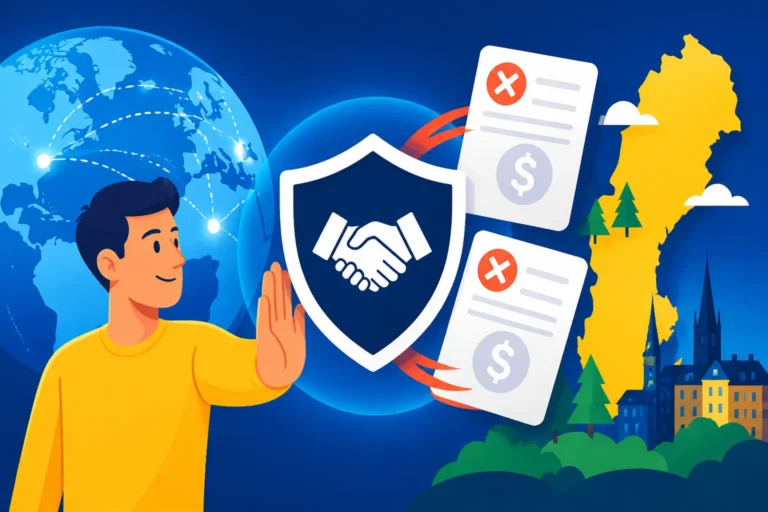
This is a big one for freelancers and small businesses that buy services from other EU countries. If you're a VAT-registered business in Sweden and you purchase a service from another VAT-registered business in, say, Germany or Spain, you typically don't pay their local VAT. Instead, you "reverse charge" the VAT. This means you effectively calculate the Swedish Moms on the service you received, report it as both output Moms and input Moms in your Momsdeklaration, and the two cancel each other out. You don't actually pay extra Moms, but you do have to report it. This ensures that VAT is collected in the country where the service is consumed. It can feel a bit confusing at first because you're adding and then immediately deducting the same amount, but it’s a standard mechanism for intra-EU business-to-business (B2B) services.
International Sales (Exporthandel)
If you sell goods or services to customers outside the EU, these sales are generally exempt from Swedish Moms. This means you don't charge Moms on these sales, and you should make sure your invoices clearly state "VAT exempt" or "Export, VAT 0%." You still report these sales on your Momsdeklaration, but in a specific field for non-taxable sales. Similarly, if you're a freelancer providing services to clients outside the EU, your invoices usually won't include Swedish Moms. This is a common situation for many digital nomads or those working remotely for foreign companies. You can explore Do I Charge VAT as a Freelancer in Sweden? for more insights into these specific scenarios.
EU Sales List (Periodisk Sammanställning)
For businesses that sell services or goods to other VAT-registered businesses within the EU (intra-EU B2B sales), you'll likely need to submit something called an "EU Sales List" (Periodisk Sammanställning) in addition to your regular Momsdeklaration. This list details your sales to other EU VAT-registered companies, including their VAT numbers and the value of the sales. This is a crucial reporting requirement for the EU to track cross-border transactions and prevent fraud. It's usually submitted quarterly or monthly, depending on the volume of your intra-EU sales.
Voluntary VAT Registration
We touched on this earlier, but it bears repeating. Even if your turnover is below the 80,000 SEK threshold, you might choose to register for Moms. The most common reason is to reclaim input Moms on significant business investments. If you're buying a new laptop, expensive software licenses, or even a vehicle for your business, and these costs include a good chunk of Moms, registering voluntarily could result in substantial tax savings. It's a strategic decision that needs to be weighed against the increased administrative burden of filing Moms declarations, but for many, it's worth it. When considering all aspects of business and tax, looking at the bigger picture of How Do I Register a Sole Trader Business in Sweden? can help you understand all the initial steps involved.
Navigating these complexities can be a real challenge, especially when juggling the demands of a new business and settling into a new country. Services like Taxes for Expats specialize in helping foreigners understand their tax obligations in Sweden, including the intricacies of Moms. They can be invaluable if you're dealing with mixed income streams, international clients, or simply feel overwhelmed by the Swedish system. It's also helpful to distinguish between different tax categories, for example, understanding What Is the Difference Between A-skatt and F-skatt in Sweden? is fundamental for entrepreneurs.
The Swedish tax agency, Skatteverket, generally operates on a system of trust but expects you to be meticulous and informed. Taking the time to understand these rules now will save you a lot of stress, and potentially money, down the line.
Disclaimer
This article is for general informational purposes only and does not constitute professional advice. Laws, prices and regulations vary by location and change over time. Consult a qualified professional for guidance on your specific situation.