Choosing a Bank in Sweden: Swedbank, SEB, Handelsbanken, and Nordea
Opening a bank account in Sweden is often the first major bureaucratic hurdle you will face, creating a frustrating "chicken and egg" scenario where you need a bank for your salary, but need a residency status for the bank. This guide meticulously breaks down the Big Four Swedish banks—Swedbank, SEB, Handelsbanken, and Nordea—to help you navigate these administrative waters and secure your financial footing.
Understanding the Swedish Banking Landscape for Newcomers
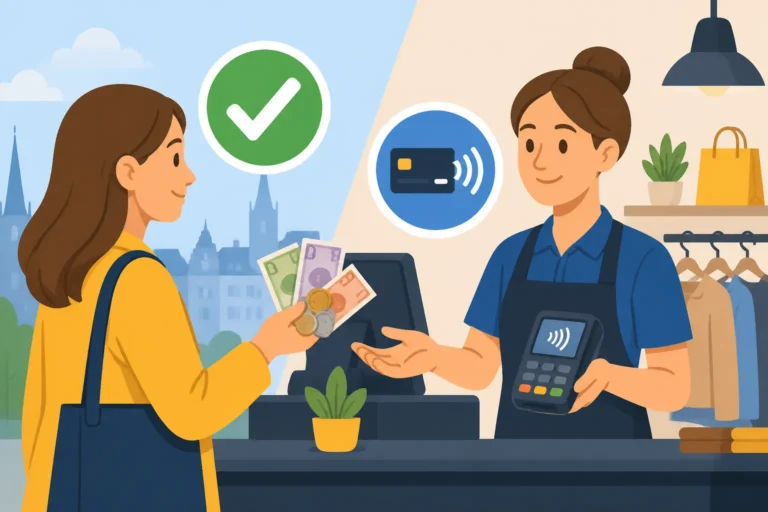
When you first land in Stockholm, Gothenburg, or Malmö, the sheer "cashlessness" of the society hits you immediately. From hot dog stands to high-end boutiques, the phrase "vi är kontantfria" (we are cash-free) is ubiquitous. This makes your choice of a local bank more than just a place to store money; it is your ticket to participating in society. Most newcomers quickly realize that Why You Need a Personnummer for Almost Every Financial Service in Sweden is not an exaggeration. Without that ten or twelve-digit number, the doors to the major banks often remain frustratingly closed, or at least heavily guarded.
The banking sector in Sweden is dominated by four massive institutions that handle the vast majority of retail and corporate traffic. While they may seem identical from the outside, their internal cultures, digital capabilities, and willingness to work with "non-standard" residents (read: us expats) vary significantly. I remember the exhaustion of walking between branches on Vasagatan, being told different things by different tellers. It is vital to understand that while EU law mandates that banks provide basic payment accounts to residents, the definition of "resident" and the required documentation can feel like a moving target.
For those moving from outside the EU, particularly Americans, the paperwork is even more daunting due to international tax regulations. You might find that services like Wise are essential for your first few months to manage international transfers while you wait for your local account to be fully vetted. Using Wise allows you to hold SEK and pay local bills via IBAN before your "proper" Swedish account is active, saving you from the predatory exchange rates offered by some traditional home-country banks.
The Personnummer Barrier and the Coordination Number
The biggest headache for any new arrival is the wait for the personal identity number. If you are on a shorter contract or still waiting for Skatteverket to process your application, you may be issued a Samordningsnummer instead. Many bank clerks will instinctively tell you that you cannot open an account without a full Personnummer. This is technically incorrect under EU law, but fighting that battle at the teller window is exhausting. Some banks are more "trained" to handle coordination numbers than others.
If you find yourself in this limbo, you should look into How to Open Your First Swedish Bank Account Without a Personnummer. Some branches of SEB and Nordea have specific protocols for this, though they often restrict your access to digital services like BankID until your full status is confirmed. It is a period of "financial purgatory" that every expat remembers vividly—having money but not being able to use the local apps that make Swedish life seamless.
The Cashless Reality and the Necessity of Swish
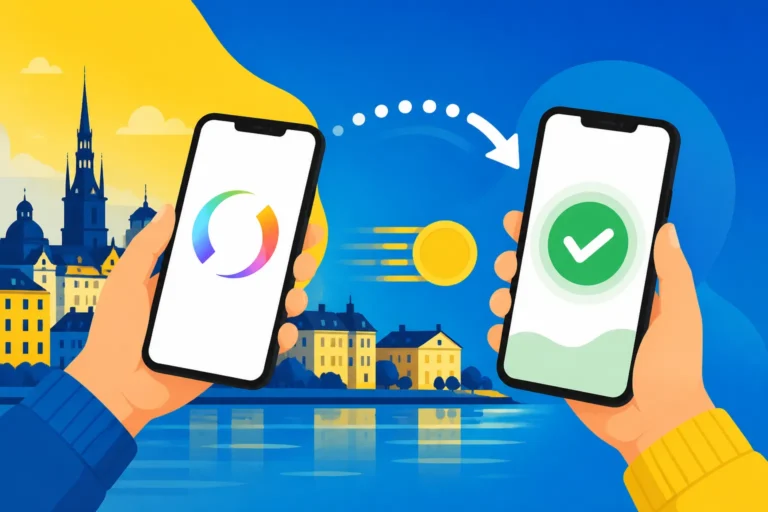
In Sweden, if you can't "Swish," you effectively don't exist in the social economy. Swish is the real-time payment system linked to your phone number and bank account. Whether you are splitting a dinner bill, buying a used bike on Blocket, or paying at a flea market, Swish is the default. However, Swish requires a BankID, and a BankID requires a Swedish bank account and a Personnummer. This hierarchy is why choosing the right bank early is so critical; you want the one that will move you through this pipeline the fastest.
Using Swish: How Sweden Pays Instantly is something you will do daily. Because the system is so integrated, the "Big Four" have spent billions ensuring their apps are stable. When choosing between them, you aren't just looking at interest rates—which are often negligible for basic accounts—you are looking at how well their app talks to the national digital infrastructure.
Swedbank: The Retail Giant and Digital Pioneer
Swedbank is perhaps the most "approachable" of the big banks for the average person. With its roots in the savings bank movement (Sparbankerna), it has the largest branch network in the country. For an expat, this is a double-edged sword. On one hand, there is likely a branch near your home or office; on the other hand, because they serve so many people, the queues can be legendary.
Swedbank has traditionally been at the forefront of digital adoption in Sweden. Their mobile app is consistently rated highly for its intuitive design. For a foreigner, their English-language interface is relatively robust, though you will still encounter the occasional "system message" in Swedish that requires a quick trip to Google Translate. They are a solid choice if you want a bank that "just works" for daily spending and has a high degree of familiarity among employers.
Accessibility and Branch Network
If you are living in a smaller town or a suburb, Swedbank is often the only bank with a physical presence. This matters more than you think. Despite Sweden being digital, there are moments—like showing your passport to verify your identity for a new BankID—where you must physically appear. Swedbank’s ubiquity makes these errands less of a trek. They are also generally very experienced with Opening a Bank Account in Sweden: A Step-by-Step Guide, meaning their staff usually knows which forms a foreigner needs.
However, be prepared for a very "standardized" experience. Swedbank is a volume business. They are not necessarily known for personalized wealth management for the average Joe. If your financial situation is complex—perhaps you are self-employed or have income from multiple countries—you might find their rigid processes a bit stifling. This is where you might need to supplement your banking with expert advice from Taxes for Expats to ensure your cross-border obligations are met, as the bank clerk is unlikely to offer much help there.
Digital Banking and Swish Integration
Swedbank’s integration with Getting BankID: Sweden's Essential Digital Identity is seamless. Once you have your Personnummer and your Swedish ID card, setting up your digital life through the Swedbank app is usually a five-minute process. Their security systems are top-notch, utilizing the "Säkerhetsstart" (security start) protocols that involve physical card readers or mobile-based biometrics.
For many expats, the Swedbank "Ung" (Youth) or "Standard" packages are the first point of entry. They offer a debit card (usually Mastercard) that works everywhere and integrates perfectly with Apple Pay and Google Pay. If you are moving money from abroad to fund your initial life in Sweden, using Wise to send SEK directly to your new Swedbank IBAN is often the fastest way to see those funds hit your balance without the bank taking a massive hidden cut in the exchange rate.
SEB: The Choice for Professionals and Investors
Skandinaviska Enskilda Banken, or SEB, is often perceived as the "professional’s bank." They have a strong history in corporate banking and private wealth management, often associated with the influential Wallenberg family. For an expat working in tech, finance, or at a major multinational like Ericsson or Volvo, SEB is a very common choice. They tend to be slightly more "international-friendly" in their mindset, perhaps because they deal with so many corporate relocations.
When I first moved, I found SEB’s staff to be exceptionally fluent in the nuances of foreign contracts. They are often more willing to look at a foreign employment contract as proof of income before your first Swedish payslip arrives. This can be a lifesaver when you are trying to prove your "solvency" to a landlord. Their branches are often more "office-like" and less like a retail store, which can feel more comfortable if you are used to a high level of service in your home country.
International Focus and Corporate Pedigree
SEB shines when it comes to more complex financial needs. If you are looking into Investment Platforms in Sweden: Avanza, Nordnet, and the Big Banks, you’ll find that SEB’s in-house investment tools are quite sophisticated. They offer various types of accounts, including the tax-efficient ISK (Investeringssparkonto), which is the gold standard for residents wanting to invest in the stock market.
Their English-language support is generally superior to Swedbank's. They provide a wealth of documentation in English, which is vital when you are trying to understand the fine print of a mortgage or a private pension plan. If you are a US citizen, SEB is very well-versed in the requirements of FATCA, though they will still ask for a mountain of paperwork. During this process, consulting with Taxes for Expats can help you navigate how your SEB accounts need to be reported back to the IRS to avoid any nasty surprises.
Customer Support for Expats
The customer service at SEB is often cited as being more "proactive" than its competitors. They have dedicated lines for different tiers of customers, and their general telephone banking is efficient. For a newcomer, they offer a "Welcome Package" that streamlines the opening of an account, the issuance of a debit card, and the eventual setup of BankID.
However, SEB is somewhat more selective. While they won't outright reject a resident, they are known to have stricter internal "KYC" (Know Your Customer) checks. If you are arriving on a freelance basis without a clear Swedish employer, you might find the questioning a bit more intense than at Swedbank. In these cases, having a clear trail of your funds—perhaps through a Wise statement—can help prove the legitimacy of your move.
Handelsbanken: The Traditionalist with Local Roots
Handelsbanken is the "outlier" in the Swedish banking world. While every other bank is centralizing and closing branches, Handelsbanken maintains a decentralized model. Every branch is its own little kingdom, and the branch manager has significant power to make decisions. This is the bank for people who value a personal relationship and want to talk to the same person twice.
For an expat, Handelsbanken can be either the best or the most frustrating experience. If you walk into a branch and hit it off with a clerk, they can move mountains for you. They are less "computer says no" than the other three. However, if that specific branch is busy or if the manager is particularly conservative, you might find it harder to get an account than at a more "automated" bank like Nordea.
Decentralized Service Model and Personal Relationships
The philosophy at Handelsbanken is that "the branch is the bank." When you call your bank, you aren't calling a call center in another city; you are calling the office down the street. For someone navigating Healthcare in Sweden for Foreign Residents: The Complete System Guide (2027), you’ll find that this localized approach mirrors how many Swedish institutions work. Having a "banker" who knows you're an expat and remembers your situation can be incredibly helpful when you eventually apply for a mortgage.
They are also known for their stability. Handelsbanken rarely participates in the aggressive (and sometimes risky) marketing campaigns of its rivals. They don't offer many "gimmicks," but they are consistently rated highest in customer satisfaction among the Big Four. If you plan on staying in Sweden for the long haul and want a partner for Private Pension Saving in Sweden: Topping Up Your Future, Handelsbanken’s conservative, long-term approach is very attractive.
The Downside of High Standards
The downside of this personalized service is that Handelsbanken can feel a bit "old school." Their digital interface, while perfectly functional, often lags slightly behind Swedbank or SEB in terms of "flashiness." Everything is clean and simple, but it lacks some of the integrated budgeting tools that younger expats might expect.
Furthermore, because of their decentralized nature, the experience can vary wildly between branches. The Handelsbanken on one street might be very welcoming to a non-EU resident, while the one three blocks away might insist on seeing a permanent residence permit before they even give you a ticket for the queue. It requires a bit of "branch shopping," which is a uniquely Swedish experience. Regardless of which branch you choose, ensure you are keeping your global tax situation in mind; using Taxes for Expats to coordinate your Swedish holdings with your home country’s requirements is a smart move for anyone using a traditional bank like this.
Nordea: The Pan-Nordic Powerhouse
Nordea is the largest financial services group in the Nordic region. Although its headquarters moved to Finland a few years ago, its presence in Sweden remains massive. Nordea is often the first choice for people who travel frequently between Nordic countries, as they have a very unified "Northern European" infrastructure. For an expat, Nordea feels like a massive, well-oiled machine. It is corporate, efficient, and very digital.
In my experience, Nordea has some of the most robust English-language phone support. Because they operate across so many borders, they are used to dealing with non-Swedish speakers. They have clear, translated guides for almost every process, from Sending Money To and From Sweden Without Losing on Fees to setting up your first automated bill payment (Autogiro).
Scale and Cross-Border Services
If your life involves moving money between Finland, Norway, Denmark, and Sweden, Nordea is hard to beat. They have specialized "Nordic" accounts that minimize the friction of cross-border living. For an expat who might be based in Malmö but working in Copenhagen, Nordea’s understanding of the "Öresund" lifestyle is a significant advantage.
Their technology stack is also impressive. Nordea’s mobile app is slick and offers a great deal of control over your cards—allowing you to "freeze" them or toggle international payments with a single swipe. They are very proactive about digital security, which is comforting when you are first learning to navigate the Swedish digital ID landscape.
Bureaucratic Hurdles for New Arrivals
Despite their international scale, Nordea can be quite bureaucratic. They are a "process-heavy" bank. If you don't fit perfectly into one of their application "buckets," you might find yourself stuck in an endless loop of requests for more documentation. They are particularly sticklers for the "Source of Wealth" and "Source of Funds" declarations required by EU anti-money laundering laws.
Newcomers often find that Nordea’s initial vetting process takes longer than Swedbank’s. You might be asked to provide bank statements from your home country going back six months, translated copies of your work permit, and a detailed explanation of why you need a Swedish account. While this is standard, Nordea's "machine" can feel a bit cold. To ease this, using Wise to handle your immediate SEK needs while Nordea processes your application can take the pressure off your first month's expenses.
| Bank | Best For | Digital Experience | Expat Friendliness |
|---|---|---|---|
| Swedbank | Accessibility & Branch Coverage | Excellent / Very Intuitive | High (Used to volume) |
| SEB | Professionals & Investors | High Quality / Sophisticated | Very High (Corporate focus) |
| Handelsbanken | Personal Service & Stability | Good / Simple | Medium (Branch dependent) |
| Nordea | Cross-Border Nordic Life | Excellent / Advanced | Medium (Process heavy) |
Essential Expat Financial Integration
Once you have chosen your bank, the real work begins. Your bank account is merely the "hub" for a larger financial ecosystem. One of the first things you should do is set up your "Autogiro" (Direct Debit) for recurring bills like rent, electricity, and your phone plan. Swedes hate manual invoicing and will often charge you a "paper invoice fee" (fakturaavgift) if you don't use digital methods.
You will also need to become intimately familiar with The Swedish Tax System Explained: Rates, Returns, and Filing. Your bank will report your interest earned and account balances directly to Skatteverket. While this makes your Swedish tax return "pre-filled" and easy, it can create complications if you are still filing in your home country. This is another area where Taxes for Expats becomes an invaluable resource, ensuring that the transparency of the Swedish system doesn't lead to double taxation or penalties elsewhere.
BankID: Your Digital Lifeblood
The moment your bank grants you a "Mobile BankID," your life in Sweden changes. Suddenly, you can log into 1177.se to book a doctor's appointment, sign a lease agreement digitally, and even pick up packages from PostNord. It is not just a banking tool; it is your national digital ID. All the Big Four banks are providers of BankID, so your choice of bank dictates your experience with this essential service.
If you are struggling with the setup, don't be afraid to ask for a "Säkerhetsdosa" (security token). While most people use the mobile app, having the physical card reader as a backup is a "pro-expat" move. It allows you to access your accounts even if your phone is lost or stolen—an event that can be a total catastrophe in a country as digital as Sweden.
Managing International Wealth
Even after you are settled with a Swedish account, you will likely still have financial ties to your home country. Whether it's paying off a student loan or receiving rental income from a property back home, the Big Four's exchange rates for international transfers are rarely the best. Using a specialist like Wise for these transactions can save you thousands of Kronor over a year.
Wise integrates well with the Swedish system. You can easily transfer money from your SEB or Nordea account to Wise via "Trustly" or a standard local transfer, and then send it anywhere in the world. This "hybrid" approach—using a Big Four bank for your local Swedish life and a specialist for your international life—is the most cost-effective strategy for any modern expat.
Important Disclaimer
The information provided in this guide is for educational and informational purposes only. Banking regulations, fees, and the specific requirements of the mentioned institutions (Swedbank, SEB, Handelsbanken, and Nordea) are subject to change and vary based on individual circumstances and regional branch policies. We are not financial advisors, and you should always consult with a professional financial or tax advisor, such as Taxes for Expats, to discuss your specific situation. Always verify current requirements directly with the bank and official Swedish authorities like Skatteverket and Migrationsverket.