Where Do I Give My Fingerprints for a Swedish Permit?
Navigating the Swedish immigration system can often feel like a treasure hunt where the clues are written in a language you don't fully understand, and the map keeps changing. One common hurdle, especially for those applying for a residence permit from outside the EU/EEA, is figuring out the "where and how" of providing your biometrics. It’s not always obvious, and a misstep here can cause frustrating delays. This guide is here to demystify the process, helping you understand exactly where you need to go and what to expect when it's time to give your fingerprints for your Swedish permit.
Understanding Biometrics for Your Swedish Permit
First things first, let's talk about what biometrics actually are in the context of your Swedish residence permit application. When the Swedish Migration Agency, Migrationsverket, talks about biometrics, they're referring to your unique biological characteristics – specifically, your fingerprints, a photograph, and a digital signature. These aren't just arbitrary hoops to jump through; they serve several critical purposes in the immigration process.
The Purpose of Biometrics
Think of your biometrics as the ultimate proof of your identity that ties you directly to your application and, eventually, to your residence permit card (known as an UT-kort). The photograph is used for your actual permit card, ensuring that the person holding the card is, in fact, you. Your fingerprints are collected and stored to prevent identity fraud and to ensure that you are not applying under multiple identities. This adds a crucial layer of security to the entire system. Finally, your digital signature is often collected for internal administrative purposes, further linking your identity to your digital application.
This collection of data helps Migrationsverket verify who you are, secure your identity within their system, and produce the physical UT-kort that you'll use to prove your right to reside in Sweden. Without these crucial pieces of information, your permit card cannot be manufactured, and your application cannot move forward to its final stages.
Who Needs to Provide Biometrics?
Generally speaking, almost all non-EU/EEA citizens who are applying for a residence permit in Sweden will need to provide biometrics. This applies whether you're coming for work, study, family reunification, or any other reason that requires a long-term stay. Even family members joining an applicant, such as spouses, sambos (cohabiting partners), or children over a certain age, will also typically need to provide their biometrics.
There are some exceptions, of course. For instance, very young children, usually those under six years old, are often exempt from providing fingerprints, though they will still need a photograph taken. Citizens of Nordic countries (Denmark, Finland, Iceland, Norway) have different rules entirely, as they don't apply for residence permits in the same way. If you're an EU/EEA citizen, your registration of residence is a different process entirely, and biometrics are generally not required for that. If you're unsure, always check the specific requirements on Migrationsverket's official website for your particular permit type. It's better to be safe than sorry and verify exactly what's expected of you and your family.
Where to Give Your Biometrics: Inside or Outside Sweden?
This is often the most confusing part for many new arrivals and prospective expats. The location where you provide your biometrics largely depends on where you are when you submit your application and whether you need a visa to enter Sweden. There are two primary scenarios: providing biometrics at a Swedish embassy or consulate abroad, or doing so at a Migrationsverket office within Sweden.
Biometrics from Outside Sweden: Swedish Embassies and Consulates
For the vast majority of first-time applicants who require a residence permit to move to Sweden, you will provide your biometrics at a Swedish embassy or consulate in your home country or the country where you are legally residing. This is the standard procedure. You typically submit your application online, and once it's registered, you'll be instructed to book an appointment at the nearest diplomatic mission.
- Booking an Appointment: Most embassies and consulates now have an online booking system for biometrics. You'll usually find instructions on their specific websites. It's crucial to follow these instructions precisely. Sometimes, you might need to wait for Migrationsverket to send you an email or a decision letter (a so-called biometrics instruction letter) before you can book, confirming that your application has been received and processed to that stage. Don't just show up without an appointment; you'll likely be turned away, which is just another headache you don't need when you're already stressed about moving.
- What to Bring: When you attend your appointment, you'll absolutely need your valid passport. Make sure it's the same passport you used for your online application. You should also bring any application numbers or reference numbers you received from Migrationsverket, as well as any booking confirmations or instruction letters from the embassy. Some embassies might request a copy of your application or other supporting documents, so it's always wise to over-prepare rather than under-prepare.
- Challenges and Considerations: Be aware that appointment slots can be limited, especially in countries with high demand for Swedish permits. This can mean long waiting times, sometimes weeks or even months. If you live far from the embassy or consulate, factor in travel time and costs. It's part of the logistical challenge of moving abroad, and it can definitely be frustrating. If you need to translate any supporting documents for your application before this stage, services like Translayte or RushTranslate can be invaluable to ensure everything is correctly certified and accepted by Migrationsverket.
For instance, if you're applying from India, you'd typically visit the Embassy of Sweden in New Delhi or the Consulate General in Mumbai. If you're in the US, it would be the Embassy in Washington D.C., or a Consulate General in New York or Los Angeles. Always check the specific diplomatic mission responsible for your region, as this can vary. These are the places that are equipped with the specialized biometric scanning equipment and secure systems required by Swedish authorities. For more details on the initial application steps, you might find our guide on Applying for a Swedish Residence Permit Online with Migrationsverket helpful.
Biometrics from Inside Sweden: Migrationsverket Offices
Now, this is where it gets a little more nuanced. It's not a universal rule that you must do your biometrics abroad. Some people are eligible to provide their biometrics at one of Migrationsverket's service centers within Sweden.
-
Who Qualifies? Generally, you can provide your biometrics in Sweden if:
- You are an applicant who does not need a visa to enter Sweden (e.g., citizens of the USA, Canada, Australia, Japan, UK, etc.) AND you have submitted your residence permit application from abroad. You can then enter Sweden and provide your biometrics at a Migrationsverket office.
- You are already legally residing in Sweden under a different permit (e.g., a temporary work permit) and are applying for an extension or a different type of permit. In this case, you're already in the system, and it makes sense for you to do it locally.
- You have received a specific instruction from Migrationsverket allowing you to do so.
A crucial point here: if you do need a visa to enter Sweden, you must wait for your permit decision and provide biometrics at an embassy/consulate abroad. Entering Sweden as a tourist while your residence permit application is pending and then trying to give biometrics will likely cause major issues, potentially leading to your application being denied or delayed significantly. It's a risk you absolutely should not take. Our article, Can I Visit Sweden While My Residence Permit Is Being Processed?, delves into this complex topic further.
-
How to Book an Appointment at Migrationsverket: If you are eligible to provide biometrics in Sweden, you'll need to book an appointment directly with Migrationsverket. Their website (migrationsverket.se) has an online booking system. You'll select "Apply for residence permit card" or a similar option. You’ll need your case number (kontrollnummer) or application number. The system will then show you available times at their various service centers.
-
What to Bring to Migrationsverket: Always bring your valid passport, the same one you used in your application. It's also a good idea to bring your application confirmation, any prior residence permit cards you hold, and your decision letter (if you have one). They will verify your identity thoroughly.
-
Locations: Migrationsverket has several service centers across Sweden where biometrics can be collected. Major ones include offices in Stockholm (e.g., Sundbyberg), Gothenburg, Malmö, Norrköping, and several others. The online booking system will show you the available locations. These offices are designed to handle a high volume of applicants, but even then, wait times for appointments can vary. Understanding how to interact with the agency is key, so don't forget to check out Dealing with Migrationsverket: Applications, Waiting, and Decisions.
Here's a quick reference table to help clarify the general rules:
| Scenario | Where to Provide Biometrics | Key Considerations |
|---|---|---|
| First-time applicant (visa-required) | Swedish Embassy/Consulate abroad | Mandatory. Cannot enter Sweden to do biometrics. Requires an appointment, potentially long waits. Bring valid passport, application number. |
| First-time applicant (visa-exempt) | Swedish Embassy/Consulate abroad OR Migrationsverket office in Sweden | If done in Sweden, you must have submitted your application before entering Sweden. Bring valid passport, application number. |
| Extension/Change of Permit (already in Sweden) | Migrationsverket office in Sweden | Standard procedure. Book online via Migrationsverket. Bring valid passport, current UT-kort, and new application details. |
| Children under 6 years old | Photo only (no fingerprints required) | A photo will still be taken at the designated location (embassy/consulate or Migrationsverket office), but fingerprints are generally waived. |
The Biometrics Appointment: What to Expect
Alright, so you’ve navigated the booking system, and your appointment day has arrived. What actually happens? Don't worry, it's a relatively straightforward and quick process, usually taking no more than 15-30 minutes once your turn comes.
The Collection Process
When it's your turn, a Migrationsverket officer (or an embassy/consulate staff member) will guide you through the process. They will:
- Verify Your Identity: This is why your passport is so crucial. They will meticulously check your passport details against your application. If there are any discrepancies, even minor ones, it could cause issues. Ensure your passport is valid and matches the one you used to apply. For tips on essential documents, refer to our article on What Documents Do I Need for a Swedish Residence Permit().
- Take Your Photo: You'll be seated in front of a camera. The photo needs to meet specific criteria – neutral expression, no hats or dark glasses (unless for religious or medical reasons), and clear visibility of your face. This photo will be printed on your UT-kort.
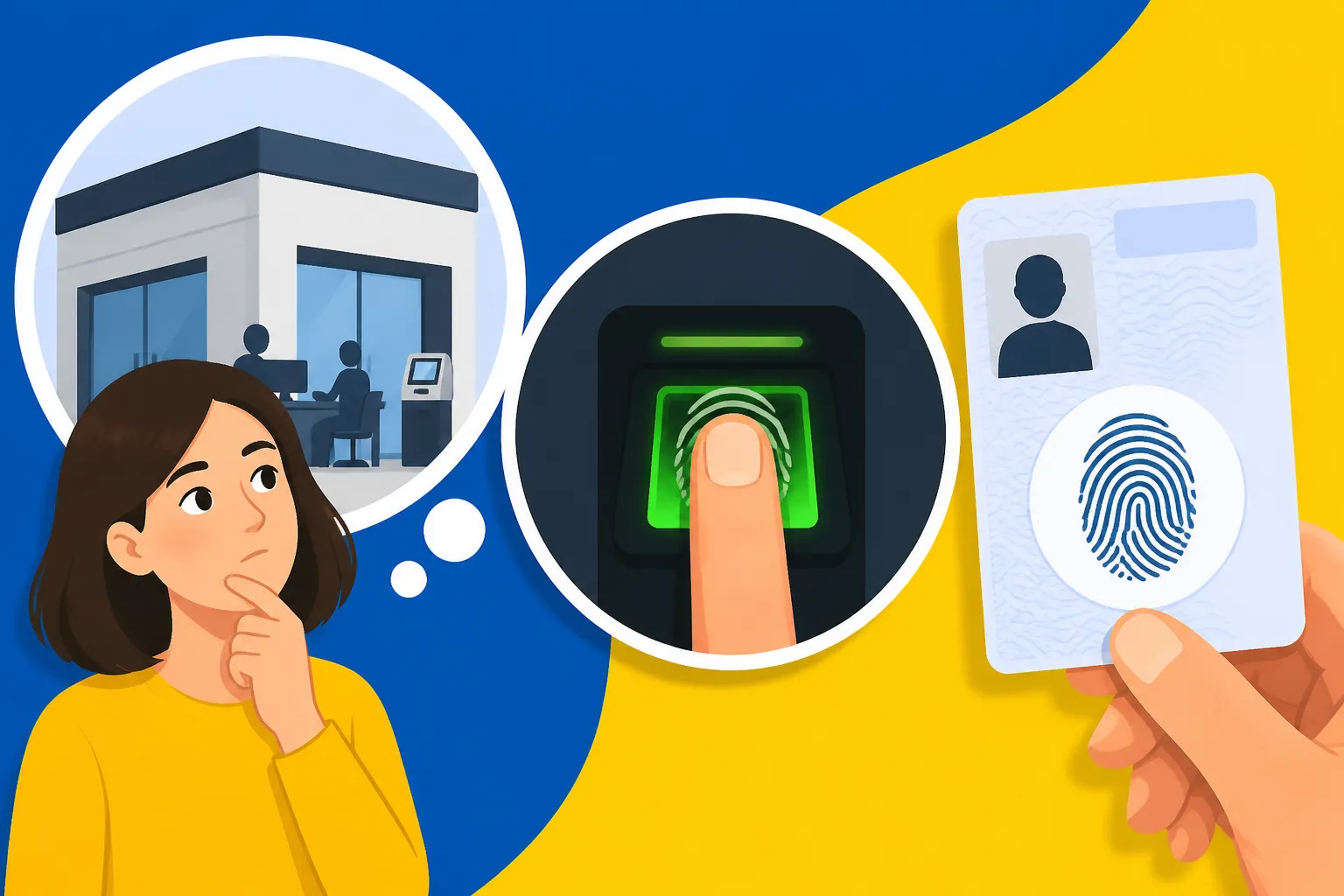
- Collect Your Fingerprints: You'll be asked to place your fingers, one by one, and then usually both thumbs, onto a digital scanner. They'll capture all ten fingerprints. The staff are experienced in guiding you, so don't worry if it feels a bit awkward. It's important that your hands are clean and free of cuts or excessive dryness, as these can sometimes make it harder to get a clear print.
- Collect Your Digital Signature: Finally, you'll be asked to sign on a digital pad. This signature will also be associated with your permit and may appear on your UT-kort.
Throughout this process, the staff are usually professional and efficient. While English is often spoken at Migrationsverket offices and embassies, especially in major cities, having any potentially necessary accompanying documents translated by professional services like RushTranslate or Translayte can definitely streamline other parts of your application, even if not directly required for the biometrics itself.
What Happens Next? The UT-kort Production
Once your biometrics are successfully captured, the information is sent for processing. This is a critical step towards the production of your physical residence permit card, the UT-kort. This card typically includes your photo, personal details, permit type, and validity period.
The time it takes for the UT-kort to be produced and delivered can vary. If you did your biometrics at an embassy or consulate abroad, the card will typically be sent to that same mission for you to pick up. They will notify you when it's ready. If you provided biometrics in Sweden, the card will usually be sent to your registered address in Sweden. This is why having your folkbokföring (population registration) in order is so important! For more on this, check out When Will I Receive My Residence Permit Card in Sweden(). Remember, you cannot travel outside Sweden and re-enter without your physical permit card, even if your permit has been granted, so patience is key during this waiting period.
Common Questions and Troubleshooting
Even with the best planning, sometimes things don't go exactly as expected. Here are some common questions and troubleshooting tips regarding biometrics for your Swedish permit.
What if I Can't Find an Appointment?
This is a common frustration, especially at popular Migrationsverket offices or at embassies in high-demand regions.
- Keep Checking: Appointment slots often open up due to cancellations. Don't just check once; make it a habit to check the booking system several times a day. Persistence often pays off.
- Consider Other Locations: If you're eligible to do biometrics in Sweden, and your local Migrationsverket office is fully booked, check if other offices in nearby cities have availability. Sometimes, a short train ride can save you weeks of waiting.
- Contact Migrationsverket/Embassy Directly: If you're facing extreme difficulties and delays are impacting critical deadlines (e.g., your current permit is expiring soon, or you have a time-sensitive job start date), you might try contacting Migrationsverket's customer service or the embassy directly. Be prepared to explain your situation clearly and provide all your application details. While they can't always conjure up appointments, they might offer advice or, in very rare urgent cases, special consideration. Remember that How Long Does Migrationsverket Take to Decide a Permit? covers the general processing times, but biometrics can add an additional layer.
What if My Fingerprints Don't Register Properly?
Occasionally, due to very dry skin, faint prints, or other factors, the digital scanner might have trouble capturing clear fingerprints.
- Don't Panic: This is not uncommon. The staff are trained to deal with this. They might ask you to re-apply pressure, re-position your fingers, or even use a hand moisturizer if your skin is particularly dry.
- Follow Instructions: Simply follow their guidance. They will try until they get a usable set of prints. In extremely rare cases, if prints cannot be obtained, there are alternative procedures, but this is highly unusual.
Lost or Damaged UT-kort: Re-doing Biometrics
Life happens, and sometimes your residence permit card gets lost, stolen, or damaged. If this occurs, you'll need to apply for a new card.
- Report Loss/Theft: If stolen, report it to the police immediately. If lost, you should also consider reporting it.
- Apply for a New Card: You apply for a replacement card through Migrationsverket. You will almost certainly need to provide new biometrics (photo, fingerprints, signature) as part of this process. This is to ensure the new card is linked to your current identity and status. You'll book an appointment at a Migrationsverket service center, just like you would for an initial biometrics appointment in Sweden.
Children and Biometrics
As mentioned earlier, children under six years old are typically exempt from providing fingerprints. However, they will still need their photograph taken for the UT-kort. For children aged six and above, the full biometric process is usually required.
- Parental Presence: Parents or legal guardians must be present for a child's biometrics appointment.
- Keep Them Calm: It can be a strange experience for a child. Try to keep them calm and explain what's happening in simple terms. The staff are usually good with children, but a relaxed child makes the process smoother for everyone.
Understanding the biometrics requirement is a key step in successfully obtaining your Swedish residence permit. By knowing where to go and what to expect, you can significantly reduce stress and avoid unnecessary delays.
Disclaimer
Please note that immigration laws and procedures in Sweden can change. While I strive to provide accurate and up-to-date information, this guide is for general informational purposes only and does not constitute legal advice. Always refer to the official websites of Migrationsverket and the relevant Swedish embassy or consulate for the most current regulations and specific instructions for your individual situation. For complex cases, consider consulting with an immigration lawyer or qualified legal professional.