Getting a Swedish ID Card After Your Personnummer
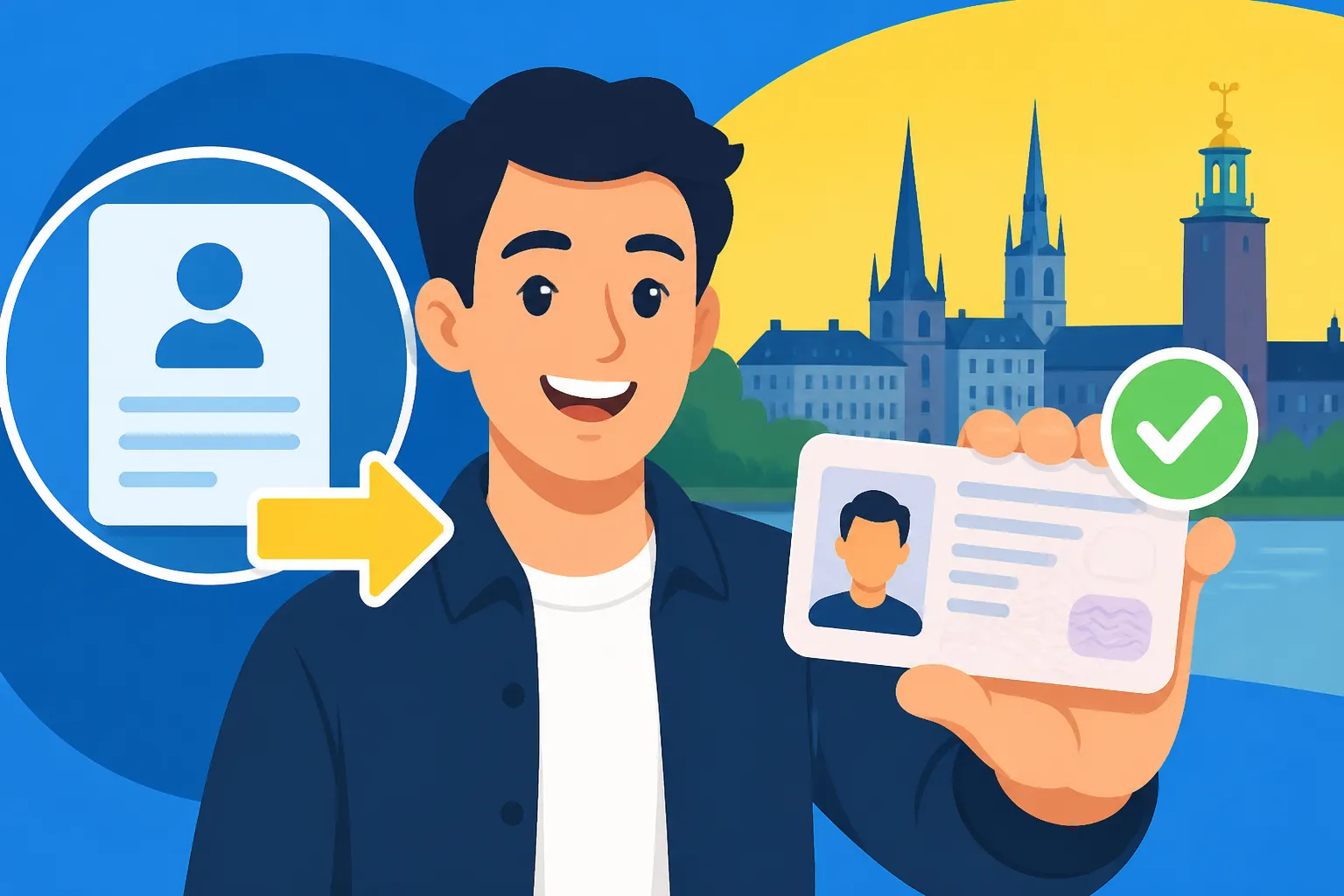
So, you've finally got your Personnummer – congratulations! That's a huge step, isn't it? You might feel like you've conquered the Swedish administrative beast, only to realise that this magical twelve-digit number doesn't actually prove who you are on a daily basis. You’re finding yourself constantly asked for a 'legit' Swedish ID, and your foreign passport often won't cut it. This guide will walk you through every hurdle of getting your own Swedish ID card, explaining its importance and the exact steps to secure one.
Why a Swedish ID Card Is Non-Negotiable
Believe me, I've been there. You arrive in Sweden, get your Personnummer, and think, "Great, I'm all set!" Then you try to open a bank account, collect a package, or even just buy something online, and you're met with that polite but firm Swedish shake of the head: "Do you have a svenskt ID-kort?" It’s a moment that feels like you’ve hit yet another bureaucratic wall, but trust me, getting a Swedish ID card is perhaps the final, most crucial step in truly embedding yourself into Swedish society. It's not just a convenience; it's a gateway.
The Limitations of Your Foreign Passport
While your passport is your primary identification for travel and for your residence permit, it’s often insufficient for everyday life in Sweden. Many Swedes don't even own a passport, preferring to use their national ID card or driver's license for identification within the country. This means many local systems, from your corner shop wanting to verify your age for certain purchases to official government agencies, are simply not set up to easily process foreign passports. They might look at it with suspicion, struggle to verify the security features, or simply refuse to accept it as valid ID because their internal guidelines only list Swedish-issued documents.
It’s an inconvenient truth, but you’ll encounter it time and time again. Trying to pick up a package from PostNord or DHL without a Swedish ID card can be a nightmare; some places might accept your foreign passport if you're lucky and the staff member is knowledgeable, but others will flat-out deny you. This isn't out of malice, but simply because their internal systems and training are heavily geared towards verifying Swedish national IDs. Your foreign passport works fine for proving your identity when you're going through Migrationsverket for your residence permit, but for the local everyday grind, it often falls short.
Unlocking Essential Swedish Services
The true power of a Swedish ID card isn't just about showing it physically; it's about what it enables digitally. This card is almost always the prerequisite for obtaining a BankID, which is Sweden's national electronic identification system. Think of BankID as your digital fingerprint, signature, and ID rolled into one. Without it, you’ll find yourself severely limited in managing your affairs. You won't be able to log into your bank account online, sign up for crucial services like electricity or internet without a mountain of paper forms, or access public services like the 1177 Vårdguiden health portal.
Consider accessing important health services through digital channels. Without a BankID, you'll struggle to book a COVID or flu vaccine through 1177, manage prescriptions, or even check your medical records online. The system is designed around this digital ID. Furthermore, many banks, despite you having a Personnummer, will insist on a Swedish ID card to fully activate your online banking services, allow you to use Swish (Sweden's ubiquitous mobile payment system), or even get a debit card that works seamlessly. It truly is the lynchpin for everything from registering with Försäkringskassan to even using specific apps for public transport like the ones for Public Transport in Sweden: SL, Regional Cards, and Apps.
The Difference Between a Bank ID Card and Skatteverket ID Card
It's common to hear people talk about "Bank ID cards" and "Skatteverket ID cards," and it can get confusing. Let's clear this up:
The Skatteverket ID card (nationellt identitetskort or nationellt ID-kort) is the official physical ID card issued by the Swedish Tax Agency (Skatteverket). This is the card we're focusing on getting. It serves as your primary proof of identity within Sweden, and for EU citizens, it can even be used for travel within the Schengen Area. It's universally accepted as a valid form of identification.
BankID is an electronic identification (e-ID) system. It’s not a physical card itself, but a digital certificate that you store on your smartphone (Mobile BankID), on a smart card, or on your computer. You need a Swedish physical ID card, most commonly the one from Skatteverket (or a Swedish driving license), to get a BankID from your bank. So, while "BankID card" is a phrase sometimes used, it's misleading. You get a physical ID card from Skatteverket, and then you use that to get a digital BankID through your bank. The physical card is the key to unlocking your digital identity, which is indispensable for Getting BankID: Sweden's Essential Digital Identity.
The Prerequisite: Your Personnummer and Folkbokföring
Before you even think about applying for a Swedish ID card, you absolutely must have your Personnummer. This shouldn't come as a surprise if you've been in Sweden for any length of time, as it's the foundation for nearly every administrative process here. If you're still navigating that, I highly recommend checking out our guide on Getting Your Personnummer: The Gateway to Swedish Healthcare. The Personnummer, which is your personal identity number, signifies that you are registered in Sweden's population register, also known as folkbokföring.
Confirming Your Population Registration
Being "folkbokförd" isn't just about having a Personnummer; it means your address and other vital information are officially registered with Skatteverket. This population registration is the legal basis for your residency and eligibility for various public services, including the ID card. Skatteverket needs to know where you live and that you are officially a resident. They won't issue an ID card to someone who isn't properly registered, even if they have a Personnummer.
To confirm your registration, you can always check your details on Skatteverket’s website if you have a digital login, or simply by calling them. Your Personnummer is tied to your folkbokföring address, and this is the address where your ID card will eventually be sent (for pickup notification). So, ensure your registered address is accurate and up-to-date. If you’ve just moved, make sure you've completed your Registering Your Move (Flyttanmälan) with Skatteverket properly. Without a current and verified address in the population register, your application could face frustrating delays, or even be rejected, sending you back to square one.
What If You Only Have a Samordningsnummer?
This is a common point of confusion and a source of frustration for many newcomers. If you've been issued a Samordningsnummer (coordination number) instead of a Personnummer, for instance, because you're planning a shorter stay or don't meet the criteria for full population registration, you generally cannot apply for a Skatteverket ID card. The Skatteverket ID card is specifically for those who are folkbokförd in Sweden.
A Samordningsnummer provides a temporary identifier for certain interactions with Swedish authorities, like paying taxes or opening a basic bank account under specific circumstances, but it doesn't grant you the same rights or access to services as a Personnummer. You can read more about The Coordination Number (Samordningsnummer) Explained. This is why you'll find that many of the critical services that rely on a Swedish ID card or BankID will be inaccessible to you with just a Samordningsnummer. This distinction often means a foreign passport remains your primary form of identification if you're not fully integrated into the population register, forcing you to navigate the inconveniences of using it for day-to-day tasks.
Applying for the Skatteverket ID Card: A Step-by-Step Walkthrough
Alright, you've got your Personnummer, you're folkbokförd, and you're ready to tackle this. The process for applying for a Skatteverket ID card can feel a bit like a treasure hunt, but with these steps, you'll be well-prepared. Remember, patience is your best friend when dealing with Swedish bureaucracy, and this step is no exception.
Booking Your Appointment and Gathering Documents
First things first: you must book an appointment at a Skatteverket office that handles ID card applications. You can't just walk in. Their website (skatteverket.se) has an online booking system, which is generally quite user-friendly. Select "Ansökan om nationellt ID-kort eller identitetskort" or similar. Appointments can sometimes be several weeks out, especially in larger cities like Stockholm, Gothenburg, or Malmö, so plan ahead. While waiting for your appointment, ensure your phone is connected. Services like Airalo can offer great eSIM options so you don't miss any important communications or have trouble booking online.
Now, for the documents, this is where many people stumble. You’ll need:
- Your valid foreign passport (or other national ID document that meets certain security standards). This is crucial for verifying your identity. It must be valid and clearly show your citizenship.
- Proof of your Personnummer and folkbokföring. While Skatteverket already has this, having a recent "Personbevis" (population registration certificate) can sometimes speed things up or clarify details. You can download this from their website or order it.
- A "known person" (intygsgivare). This is often the trickiest part for newcomers. The known person must be over 18, have a valid Swedish ID card or driving license themselves, and be able to confirm your identity by knowing you. They must physically accompany you to your appointment and bring their own valid Swedish ID. More on this "known person" dilemma later, but it's a critical requirement.
- The application fee. As of early 2024, the fee is 400 SEK. You usually pay this at the office during your appointment, often by card. They generally don't accept cash.
Having all these documents organised will make your appointment much smoother. Don't forget copies of everything, just in case! And please, don't assume your foreign national ID card will always pass muster for proving who you are – a passport is almost always safer for the initial application. This is especially true as you’re trying to use a foreign ID to get a Swedish one; the requirements for their acceptance are often higher.
The Application Process at the Skatteverket Office
On the day of your appointment, arrive a little early. You'll likely check in at a self-service machine, get a queue number, and wait for your turn. When your number is called, you'll go to a counter or a private room. This is where your "known person" becomes invaluable. The Skatteverket official will verify your identity using your passport and the known person's Swedish ID. They will ask the known person to confirm that they know you and can vouch for your identity. This is a very Swedish way of doing things – relying on trust and personal connection to verify identity.
The official will then take your photo (no need to bring one yourself, they do it on-site) and capture your fingerprints. They’ll also confirm your details from the population register. It's a fairly quick process if everything is in order and your documents are all present and correct. The whole process, including waiting, usually takes about 30-45 minutes. It’s vital to be clear and concise with your answers, and if your Swedish isn’t perfect yet, don’t hesitate to ask if they can speak English. Most Skatteverket staff are proficient in English and very helpful to foreigners, but it helps if you've prepared for the questions.
Paying the Fee and the Waiting Game
Once your application is complete, you'll pay the 400 SEK fee. Make sure you have a working debit or credit card. They are quite strict on payment methods. After payment, you'll receive a receipt and a confirmation that your application has been processed. Now comes the waiting game. The typical processing time for a Skatteverket ID card is about 2-4 weeks. During this period, they are manufacturing your card and conducting background checks to ensure everything is legitimate.
You won't get updates via email or SMS unless you specifically sign up for some notification services through your bank (which requires BankID, creating a bit of a chicken-and-egg scenario). The most reliable way to know your card is ready is to wait for a physical letter from PostNord or Skatteverket, informing you that your card has arrived at a designated PostNord service point for pickup. This letter is your pickup notification, so keep it safe! It will contain a specific tracking number and details on where and when to collect your ID.
Picking Up Your Precious ID Card
The moment you get that pickup notification in the mail, it feels like Christmas morning! But don't rush off just yet. There are specific rules for collection to ensure your new ID card doesn't fall into the wrong hands. It's another layer of security, but one that can feel slightly redundant after all the hoops you've already jumped through.
Who Can Pick Up the Card and Proving Your Identity Again
When you head to the PostNord service point (often a local grocery store or convenience store), you must bring the pickup notification and a valid form of identification. Since you're picking up your new Swedish ID card, you'll generally need your foreign passport to prove who you are. This is why it’s so important to keep your passport valid and accessible throughout the entire process. The staff at the service point will scan the barcode on your notification, verify your identity against your passport, and then hand over your card.
The system is designed to prevent fraud, and the staff are usually quite diligent. They will carefully compare your face to the photo in your passport and on the new ID card. Be prepared for this final verification step. It can sometimes feel like a bit of a "full circle" moment – using your old foreign ID to collect your shiny new Swedish one! Once you have it, take a moment to double-check all the details on the card: your name, Personnummer, photo, and signature. Make sure everything is correct.
What to Do If You Can't Pick It Up Yourself
In rare cases, you might be unable to pick up your ID card personally. Perhaps you're ill, or have an urgent travel commitment. Unfortunately, the rules are quite strict. A Skatteverket ID card is a personal document, and generally, only the person it belongs to can pick it up. Unlike some other packages where you can give power of attorney, this isn't usually an option for an official ID card due to the stringent identity verification requirements.
If there's an exceptional circumstance, your best bet is to contact Skatteverket directly as soon as possible to explain your situation. They might be able to offer guidance or a very limited exception, but it's not guaranteed. In most cases, if you miss the pickup window (usually 14 days), the card will be sent back to Skatteverket, and you'll have to start the application process all over again – including paying another fee. So, it's really in your best interest to ensure you're available during that pickup period.
Navigating Common Hurdles and What to Do If Things Go Wrong
Even with all the preparation, the path to your Swedish ID card might not be perfectly smooth. Many expats hit a snag or two along the way. Knowing what these common hurdles are and how to approach them can save you a lot of stress and re-dos.
The 'Known Person' Dilemma for New Arrivals
This is, without a doubt, the biggest headache for many new arrivals. Skatteverket requires a "known person" (intygsgivare) to accompany you to your appointment to verify your identity. This person must:
- Be 18 years or older.
- Hold a valid Swedish ID card or Swedish driving license.
- Be able to confirm your identity by knowing you (e.g., they know your name, address, and Personnummer) and vouching for you in person.
Now, imagine you’ve just arrived in Sweden, you don’t speak much Swedish, and you don’t have an established network. Finding someone who has a Swedish ID and knows you well enough to vouch for you can be incredibly difficult. It feels like a Catch-22: you need friends to get an ID, but you need an ID to fully participate in society and make friends. Many expats resort to asking colleagues, their employer (if it's a small company where you're well-known), a landlord, or even Swedish teachers. Sometimes, if you're lucky, a kind neighbour might step up.
If you genuinely cannot find a known person, you are in a difficult spot. Skatteverket's official stance is that this requirement is almost always mandatory. In very exceptional circumstances, they might consider alternatives if you can prove extensive difficulty, but this is rare and involves much more paperwork and uncertainty. Your best bet is to network actively. Consider joining expat groups online, attending language classes, or using professional connections. Some banks used to offer this service for their customers, but it's become increasingly rare, as the primary responsibility now rests with Skatteverket. Finding this intygsgivare is perhaps the ultimate test of your early integration into Swedish society, so don't underestimate its importance.
Dealing with Delays or Lost Cards
Despite all your careful planning, delays can happen. If the expected 2-4 weeks pass and you haven't received your pickup notification, first, don't panic. Check your regular mail carefully, as the notification is a physical letter. If still nothing after a reasonable extra week, you can try contacting Skatteverket’s customer service. They can check the status of your application. Remember to have your Personnummer ready when you call. They might be able to tell you if it's been delayed in production, if the notification was sent, or if there's an issue.
What if your precious new ID card gets lost or stolen after you've picked it up? This is a serious matter.
- Report it immediately: If stolen, file a police report (polisanmälan) right away. This is crucial to protect yourself from identity theft.
- Contact Skatteverket: Inform them that your ID card is lost or stolen. They will mark it as invalid in their system.
- Apply for a new one: Unfortunately, you'll need to go through the entire application process again, including booking a new appointment, bringing your documents and a known person, and paying the 400 SEK fee again. There are no shortcuts here, as each card is issued with strict identity verification.
It’s a hassle, but it's vital to act quickly to prevent misuse. Getting your Swedish ID card is the final puzzle piece in really settling in and accessing everything Sweden has to offer. While it can be a challenging process, especially with the "known person" requirement, once it's done, you'll breathe a sigh of relief and wonder how you ever managed without it. Now go forth and enjoy the ease of being a fully identified Swede!
| Feature / ID Type | Skatteverket ID Card | BankID (Mobile/on file) | Foreign Passport | Swedish Driving Licence |
|---|---|---|---|---|
| Purpose | General ID | Digital ID | Travel, Primary ID for permit | Driving, General ID |
| Issuer | Skatteverket | Banks (e.g., Swedbank, SEB) | Your home country | Transportstyrelsen |
| Cost (approx.) | 400 SEK | Free (via bank) | Varies | Varies (150-250 SEK for application) |
| Prerequisites | Personnummer, folkbokförd, ID proof, known person | Skatteverket ID Card (usually), Bank account, Personnummer | – | Skatteverket ID Card (often), foreign licence exchange |
| Physical Card | Yes | No (digital only) | Yes | Yes |
| Digital Use | No (but enables BankID) | Yes (core function) | No | No |
| Proof of Age | Yes | Yes (indirectly) | Yes | Yes |
| Opening Bank Account | Often required | No (often requires card) | Sometimes sufficient with permit | Can be used with permit |
| Collecting Packages | Yes | Yes (with PostNord app and digital ID) | Sometimes accepted | Yes |
| Doctor's Appointments | Yes | Yes (with 1177.se, requires BankID) | Sometimes accepted | Yes |
| Required for Swedish Driving Licence | Yes | No | No | N/A |
Disclaimer
The information provided in this guide is for general informational purposes only and does not constitute legal or financial advice. While we strive to keep the content up-to-date and accurate, regulations and procedures in Sweden can change. Always consult official sources like Skatteverket, Migrationsverket, or other relevant authorities for the most current and specific information pertaining to your individual situation. We are not liable for any decisions made based on the information presented here.