Is Flexible Working Common in Sweden?
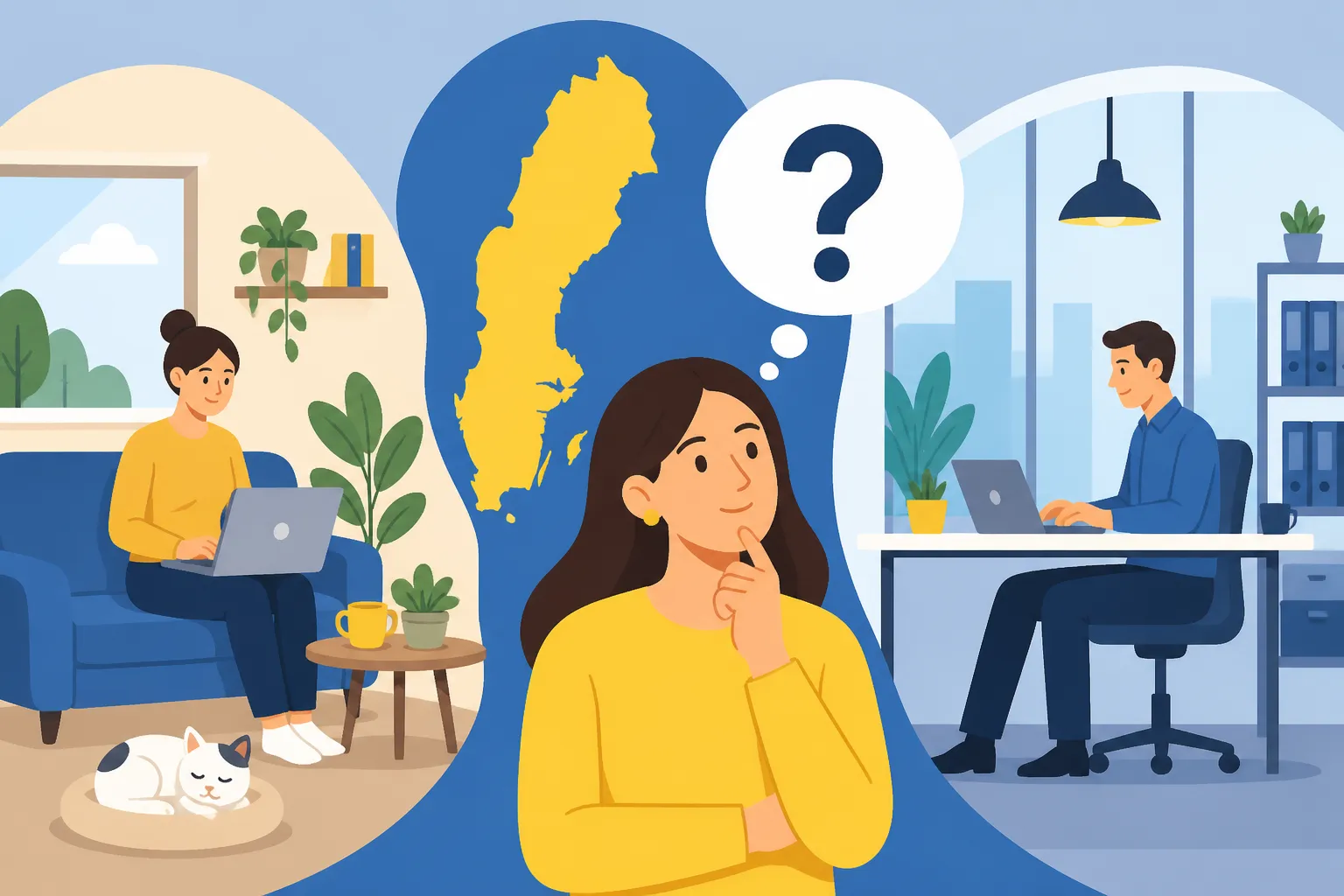
One of the most common questions I hear from fellow expats moving to Sweden, especially those coming from more rigid work cultures, is whether flexible working is truly a thing here. It’s natural to wonder, as Sweden has such a strong reputation for work-life balance, but the reality can sometimes be a bit more nuanced than the postcard-perfect image. This guide will dive deep into what flexible working actually looks like in Sweden, how it's implemented, and what you, as an expat, can realistically expect and navigate in your professional life here.
The Swedish Approach to Work-Life Balance and Flexibility
Sweden's commitment to work-life balance is deeply ingrained in its societal fabric, often a delightful surprise for newcomers. This isn't just a trendy concept; it's a fundamental principle that influences everything from parental leave policies to daily office routines. However, the specific ways this balance manifests in terms of flexible working can sometimes differ from what you might imagine, often relying on a blend of informal trust and formal agreements. It’s not always about 'do whatever you want,' but rather about finding a mutually beneficial arrangement that respects both employee well-being and business needs. The key often lies in understanding the underlying cultural expectations and the robust legal and contractual frameworks that underpin Swedish employment.
Understanding 'Lagom' and Its Impact on Work Culture
You'll hear the word "lagom" a lot in Sweden, and it's absolutely central to understanding the Swedish workplace ethos, including flexibility. "Lagom" essentially means "just the right amount," not too much, not too little. In the context of work, this translates to a desire for balance and moderation. It means finding a sustainable pace, avoiding burnout, and ensuring there's enough time for both professional responsibilities and personal life. This cultural value fosters an environment where long working hours are generally frowned upon, and taking breaks, including the cherished "fika," is encouraged.
For flexible working, 'lagom' means that while extreme flexibility (like working from a beach full-time with no office presence) might not be the default, there's a strong leaning towards reasonable accommodations. This could involve adjusting start and end times, taking longer lunches to run errands, or working from home a couple of days a week. The idea is to find a setup that is "lagom" for everyone involved – the employee, the team, and the company. It’s about mutual respect and trust, rather than strict, rigid rules. This approach encourages open dialogue between employees and managers about what works best, aiming for a harmonious equilibrium.
Legal Frameworks and Collective Agreements
While "lagom" sets the cultural tone, it's Sweden's comprehensive legal and contractual frameworks that often formalize the possibilities for flexible working. Unlike some countries where flexibility might be an ad-hoc perk, many aspects are protected by law or by collective agreements (kollektivavtal) negotiated between trade unions and employers' organizations. These agreements often go beyond minimum legal requirements, offering enhanced benefits and clarity on working conditions.
For instance, specific laws govern aspects like working hours, ensuring regular breaks, maximum weekly hours, and rest periods. Beyond the general law, many collective agreements specifically address things like flexitime, part-time work, and opportunities for remote work. If your workplace has a kollektivavtal, which many do, it's worth familiarizing yourself with its contents, as it can provide a roadmap to your rights regarding flexible working. Joining a Swedish trade union, or fackförbund, can be incredibly beneficial here, as they can explain your specific agreement and advocate on your behalf. Understanding Your Rights Under Sweden's Employment Protection Act (LAS) is crucial for all employees, but especially for new arrivals trying to navigate the system. These frameworks provide a strong foundation for employees to request and often receive various forms of flexibility, knowing there's a structure supporting such requests.
Common Forms of Flexible Working in Sweden
Sweden offers a variety of flexible working arrangements, reflecting its strong commitment to employee well-being and productivity. These aren't just buzzwords but established practices that many Swedish companies embrace. However, the specific implementation can vary significantly depending on the industry, company culture, and the nature of the role. It’s important to understand the most common types so you can gauge what might be available in your own workplace or during your job search. From daily adjustments to long-term leave, the Swedish system aims to provide options that support different life stages and personal needs.
Flexitime and Compressed Workweeks
Flexitime, or "flextid," is quite common in Sweden, allowing employees to vary their start and end times within certain limits. Typically, there's a core period when everyone is expected to be present (e.g., 9 AM to 3 PM), but outside of that, you might have the option to come in earlier and leave earlier, or start later and finish later. This flexibility is invaluable for managing personal appointments, school drop-offs, or simply avoiding rush hour. It’s usually tracked, and any accumulated 'flex hours' can often be taken off as longer breaks or even full days, within agreed-upon limits, ensuring that overtime doesn't simply become unpaid extra work.
Compressed workweeks are less universally common than daily flexitime, but they do exist, particularly in sectors where project-based work allows for it. This might involve working slightly longer hours on certain days to get a full day off within the week, for example, working nine-hour days to have every other Friday off. This arrangement requires careful planning and coordination within teams to ensure continuity of work, but it offers a significant boost to work-life balance for those who can utilize it. The discussions around how Swedish Working Hours and Overtime Rules Work are directly relevant here, as these arrangements must still adhere to legal limits on total working hours.
Remote Work and Hybrid Models
The pandemic certainly accelerated the adoption of remote work globally, and Sweden was no exception. Before 2020, working from home was relatively common for some roles, especially in tech and knowledge-based industries, but it wasn't the default. Now, hybrid models have become the norm for many office-based roles. Most companies offer a blend of office and home-based work, perhaps two to three days a week in the office and the rest remotely. This isn't usually codified into law but is often an agreement at the company or team level.
The flexibility often extends to where you can work remotely from, though there are often discussions about tax implications if you're working from outside Sweden for extended periods. This is where services like Taxes for Expats become particularly useful, as navigating international tax residency rules when working across borders can be complex. While the initial surge of fully remote opportunities has somewhat stabilized, the expectation of at least some remote work flexibility remains strong, and many employers see it as a key component of attracting and retaining talent. When you're looking for jobs, don't be shy about asking about the company's policy on this.
Parental Leave and Other Family-Related Absences
This is perhaps where Sweden truly shines in terms of flexibility and family support. The country boasts one of the most generous parental leave systems in the world, allowing parents a combined total of 480 days of paid leave per child, which can be used flexibly until the child turns 12. Both parents are encouraged to take leave, with specific days reserved for each, promoting shared parenting responsibilities. This isn't just for newborns; parents can take days off to attend child appointments, adjust to school starts, or simply spend quality time with their children.
Beyond parental leave, employees also have the right to take paid leave to care for a sick child (VAB – vård av barn), which is incredibly reassuring for working parents. Understanding Parental Leave in Sweden: Föräldrapenning and the 480 Days is a must-read for anyone planning a family or with young children. Additionally, there are provisions for other types of temporary leave, such as for urgent family matters or educational leave. These extensive allowances underscore Sweden's deep commitment to supporting parents and families, recognizing that family responsibilities are a natural part of life and should not hinder one's career progression.
Navigating Flexible Work as an Expat in Sweden
As an expat, navigating flexible working in Sweden can come with its own unique set of opportunities and challenges. While the overall culture is supportive, your specific situation, including your industry, language skills, and visa status, can influence your experience. It's not just about knowing your rights; it's also about understanding the unwritten rules and cultural norms that facilitate these arrangements. Being proactive, clear, and culturally sensitive in your requests can make a significant difference in how you access and utilize flexible work options.
Asking for Flexibility: Tips for Approaching Your Employer
When it comes to requesting flexible arrangements, Swedish workplaces generally value direct but collaborative communication. It's not usually about demanding; it's about proposing a solution that benefits both you and the company. Here are a few tips:
- Do your research: Understand your company's existing policies, any relevant collective agreements, and how others in your team or department manage their work. If your company doesn't have a formal policy on remote work, for example, look for precedents within your team.
- Prepare your case: Clearly articulate why you're requesting flexibility (e.g., to manage childcare, reduce commuting stress, improve focus) and, crucially, how it will benefit your performance and the team. Emphasize how you will maintain productivity and communication.
- Propose a trial period: If it's a new arrangement, suggest starting with a trial period (e.g., three months) to demonstrate its effectiveness. This reduces perceived risk for your employer.
- Be open to compromise: Flexibility often works both ways. Be prepared to discuss and adapt your proposal to meet your team's needs. Maybe you want to work from home three days a week, but the team needs you in the office for crucial meetings two specific days. Being flexible yourself makes it easier for your employer to say yes.
- Understand the 'Why': Sometimes, flexibility might be limited due to the nature of the role (e.g., frontline services) or team dynamics. Try to understand these constraints.
Swedish managers often appreciate initiative and clear, well-reasoned arguments. Don't be afraid to initiate the conversation, as long as you do so respectfully and constructively.
Potential Challenges and Misconceptions
While flexibility is common, it's not a given for every role or every person. Expats might face certain challenges:
- Role-specific limitations: Some jobs, particularly in manufacturing, healthcare, or service industries that require physical presence, naturally offer less scope for remote or flexitime work. Even within a company, an accountant might have more flexibility than a lab technician.
- Company culture: While Sweden generally promotes flexibility, individual companies and even specific teams can have varying cultures. Smaller startups might be more agile, while larger, more traditional organizations might have more rigid structures.
- Initial probation period: During your probationary period (provanställning), which is common in Sweden, it might be advisable to establish yourself and understand the team dynamics before making significant requests for flexibility.
- Misconceptions about "free time": While Swedes value free time, flexible working is still about fulfilling your duties. It’s not a license to work less, but to work smarter and in a way that better integrates with your life. The expectation of delivering results remains high.
It's also worth remembering that the ease of Can I Get a Credit Card in Sweden as a Newcomer? or navigating other financial aspects can sometimes be linked to the stability and perceived permanence of your employment situation, which flexible arrangements, if poorly managed, might theoretically impact (though rarely in practice for standard flexible work).
Language and Integration: How This Affects Access to Flexible Roles
Your Swedish language skills can also play a subtle but significant role in your access to and perception of flexible work. While many international companies operate fully in English, especially in cities like Stockholm, Gothenburg, and Malmö, being proficient in Swedish can open more doors.
- Broader job market: A strong command of Swedish expands your job opportunities significantly, including roles in public sector or smaller, local companies where Swedish is a requirement. These companies might have equally good, or even better, flexible work policies. Learning Swedish: SFI, Courses, and Language Paths for Newcomers is an excellent place to start this journey.
- Communication with colleagues and clients: Even in English-speaking workplaces, much of the informal communication, particularly during fika or spontaneous hallway chats, happens in Swedish. This can make it harder to build strong relationships and trust, which are often key to negotiating flexible arrangements.
- Understanding nuances: Swedish allows you to fully grasp the nuances of workplace communication, policies, and informal agreements, making it easier to advocate for your needs and understand expectations. Consider language learning platforms like iTalki to boost your confidence and proficiency outside of structured classes. The ability to communicate effectively in Swedish can profoundly impact your overall integration and feeling of belonging within a Swedish workplace, indirectly influencing how comfortable you feel requesting and receiving flexible work arrangements.
For new arrivals, understanding Why Do I Need a Personnummer to Start Working in Sweden? is fundamental, as it unlocks access to many of the social and economic systems that support flexible working, such as parental benefits and social security.
Here’s a quick overview of common flexible work options and what you might expect:
| Flexible Work Option | Description | Typical Availability | Key Considerations for Expats |
|---|---|---|---|
| Flexitime | Varying start/end times around a core workday. | Common in office jobs | Requires good self-management and team coordination. |
| Remote/Hybrid Work | Working partly or fully from home or another location. | Common in knowledge work | Tax implications if working internationally; company culture varies. |
| Compressed Workweeks | Working longer hours certain days for a full day off. | Less common, niche roles | Needs explicit agreement; might not be suitable for all roles. |
| Part-time Work | Working fewer hours than a full-time employee. | Common, especially for parents | Impact on income, pension, and benefits. |
| Parental Leave | Extensive paid leave for parents after childbirth/adoption. | Universal | Requires registration with Försäkringskassan; detailed planning. |
| VAB (Care for Sick Child) | Paid leave to care for a sick child. | Universal | Essential for parents; understanding the notification process is key. |
| Study Leave | Right to take unpaid leave for studies, sometimes with partial pay through agreements. | Varies by employer | Impact on finances; often requires a specific duration of employment. |
| Sabbatical/Leave of Absence | Extended period of unpaid leave for personal reasons. | Less common, discretionary | Employer's discretion; usually requires long tenure and good reason. |
As you can see, flexible working is indeed common in Sweden, but it’s often structured and driven by a blend of cultural expectations, legal rights, and collective agreements. For expats, understanding these underlying mechanisms and being prepared to communicate effectively are your best tools for leveraging the Swedish commitment to work-life balance.
Disclaimer
Please note that while this guide provides comprehensive information based on current knowledge and typical experiences in Sweden, laws and regulations can change. Always consult official sources like Migrationsverket, Skatteverket, or professional legal and financial advisors for the most up-to-date and personalized advice regarding your specific situation. This content is for informational purposes only and does not constitute legal or professional advice.